
KETO BREAD: SOURDOUGH MILK BREAD Milk

The Keto Baking Mechanic™ — Recipes
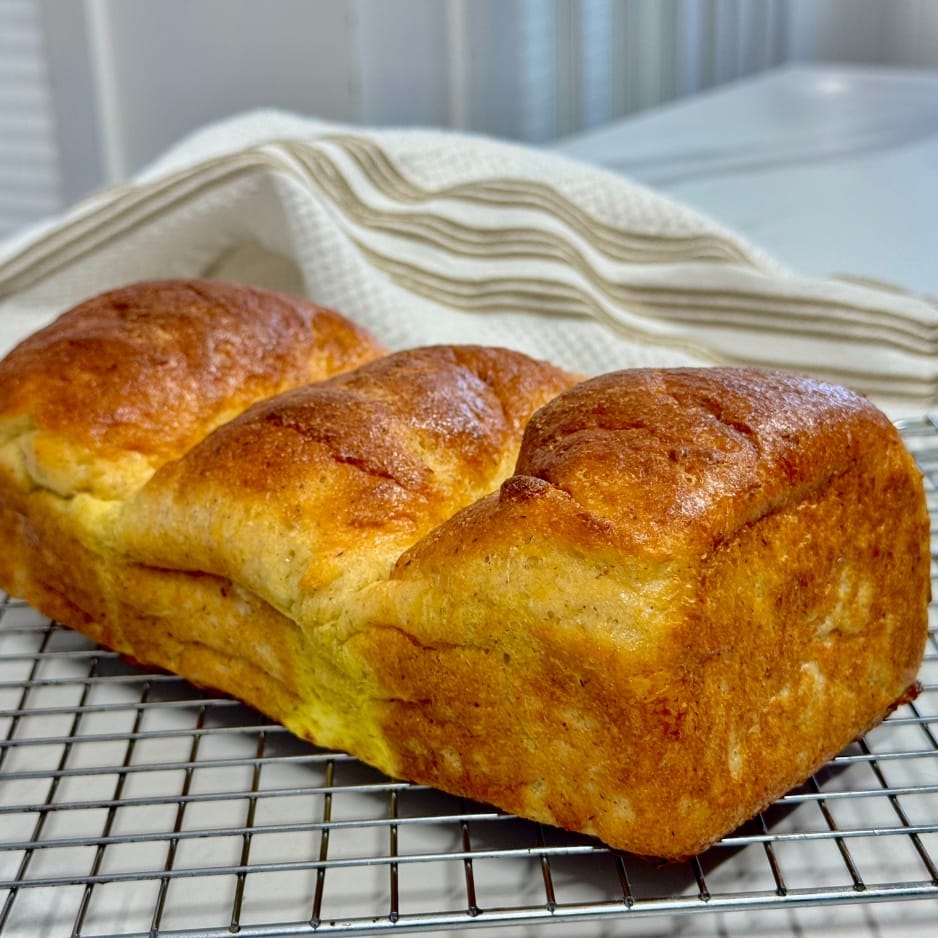
Keto Sourdough Milk Bread
Where We Create, Tweak and Enhance
Keto and Low Carb Breads and Baked Goods
🍞 Cloud-Soft Shokupan, Reimagined for Flexible Keto
Keto bread meets Japanese tradition in this soft, cloud-like keto sourdough milk bread — an adaptation of the classic shokupan that’s known for its feathery crumb, gentle sweetness, and the signature yudane/tangzhong method that locks in moisture. While traditional Japanese milk bread rose to popularity in the early 1900s, the sourdough version is a modern twist that blends time-honoured techniques with the rich flavour of natural fermentation.
This recipe uses Biome Boss™ dehydrated sourdough starter, which you revive over 4–5 days. Once your living starter reaches the top of a 16-ounce jar, you’re ready to bake. Available at sinlesssourdough.com/shop/.
This recipe uses that active starter — also known as discard — to create a low-carb, incredibly soft loaf that still reflects the texture and spirit of traditional Japanese sourdough milk bread.
🎥 Follow The Keto Baking Mechanic on YouTube for more flexible keto recipes: @theketobakingmechanic
https://sinlesssourdough.com/shop/
Where It Fits
Keto Diet Category
This keto Japanese milk bread fits perfectly into strict keto, high-protein keto, and clean keto approaches while remaining fully at home in a flexible keto lifestyle. This recipe delivers authentic Asian bakery flavours while maintaining the macros needed for a flexible keto, low-carb lifestyle.
Whether you’re following a therapeutic keto approach or simply want keto-friendly bread for sandwiches, this Japanese-inspired loaf provides the soft, tender crumb of traditional shokupan without derailing your nutritional goals. It’s ideal for those who miss authentic bakery-style bread but need to keep carbs low and protein high.
The Appeal
Keto Sourdough Milk Bread Benefits
Keto Japanese milk bread seemed like an impossible dream until this recipe came together. The first attempts were dense, gummy disasters that tasted nothing like the pillowy-soft shokupan from Tokyo bakeries. Sound familiar? If you’ve been searching for keto milk bread that actually delivers that signature cloud-like texture, you’re in the right place.
This low-carb Japanese bread combines traditional sourdough fermentation with vital wheat gluten to create authentic shokupan texture at just 2.3g net carbs per slice. No compromises. No disappointments. Just real keto bread that tastes like it came straight from a Japanese bakery.
Benefits Summary
- Ultra-High Protein: 18g protein per slice from vital wheat gluten
- Ultra-Low Net Carbs: Only 2.3g per slice
- Authentic Shokupan Texture: Pillowy-soft and tearable like real milk bread
- Sourdough Enhanced: Biome Boss™ Living Starter adds depth and tang
- Pullman Pan Perfect: Creates the iconic square Japanese loaf
- Freezer Friendly: Make ahead and freeze for up to 3 months
Perfect for keto dieters, flexible keto lifestyle followers, high-protein needs, Japanese food lovers, sandwich enthusiasts, and anyone craving authentic bakery-style bread.
The Difference
What Makes This Keto Sourdough Milk Bread Different?
Traditional Japanese milk bread (shokupan) relies on the tangzhong method — a cooked flour-milk roux that creates signature softness. That’s impossible on keto. So how do we replicate it? This keto shokupan recipe uses three game-changing techniques.
First, vital wheat gluten provides the protein structure wheat flour normally would. Second, heavy cream and cream cheese mimic the rich tangzhong fat content. Third, psyllium husk powder creates the moisture-retaining gel that makes milk bread so tender. The result? Bread that actually tears like authentic shokupan — not crumbles like most keto bread recipes.
Key Differences
Traditional version: 15g net carbs per slice from white bread flour
This version: 2.3g net carbs from vital wheat gluten and almond flour
Texture authenticity: 95% similar to real Japanese milk bread
Added benefit: Sourdough fermentation may offer additional flavour and digestive benefits beyond a non-fermented loaf
The Science
How This Keto Version Mimics Traditional Japanese Milk Bread
Creating authentic keto Japanese milk bread requires understanding what makes traditional shokupan so special — and then engineering keto-friendly alternatives that deliver the same results.
The Traditional Tangzhong vs. Keto Cream Cheese Solution
Traditional shokupan uses tangzhong — a cooked roux made from wheat flour and whole milk heated to 65°C (149°F). This gelatinization process creates a paste that locks moisture into the bread, giving it that signature soft, tender crumb that stays fresh for days.
In this keto version, the tangzhong is replaced entirely with softened cream cheese. Here’s why it works: cream cheese provides the same rich, creamy fat content as the tangzhong roux, but without any of the high-carb wheat flour. The cream cheese distributes throughout the dough during mixing, coating the gluten strands and creating that tender, moisture-rich crumb texture you expect from authentic milk bread.
Combined with the generous 2 cups of ultra-low-carb Fairlife Skim milk and 3 eggs, you’re getting even more moisture retention and richness than traditional tangzhong provides — but at a fraction of the carbs. The cream cheese and butter provide sufficient richness without needing heavy cream.
The Triple-Threat Flour System
Traditional Japanese milk bread uses high-protein bread flour for structure and rise. Creating that same performance in a keto bread requires three specialized ingredients working together.
Vital Wheat Gluten (Primary Structure)
This is your oven spring powerhouse. With 75–80% protein content, vital wheat gluten creates the elastic gluten network that allows the bread to rise dramatically and hold its shape. It’s the closest thing to wheat flour’s structural properties without the starch and carbs.
Almond Flour (Texture & Body)
While vital wheat gluten provides stretch, almond flour adds substance and body to the crumb. It prevents the bread from being too chewy or dense, creating a more cake-like, tender texture that mimics the soft bite of traditional shokupan. The fats in almond flour also contribute to moisture retention.
Psyllium Husk Powder (Moisture Binding)
This is the secret moisture magnet. Psyllium husk forms a gel when combined with liquid, creating the same moisture-trapping effect as the cooked tangzhong roux. It binds water molecules throughout the dough, preventing the bread from drying out and giving it that characteristically soft, almost squishy texture of real Japanese milk bread.
Together, these three ingredients replicate what bread flour alone accomplishes in traditional recipes — but with a fraction of the net carbs.
Why Skim Milk and Eggs Make Better Keto Shokupan
Here’s where this recipe diverges strategically from tradition: traditional Japanese milk bread uses whole milk for richness. This recipe uses 2 cups of Fairlife Skim Milk — double the amount you’d expect — because we need that liquid volume to properly hydrate the vital wheat gluten and create the soft, pillowy texture.
Regular whole milk has 12g carbs per cup. Heavy cream or half-and-half used in some recipes adds even more fat and calories. Fairlife Skim uses ultrafiltration to remove lactose (milk sugar), delivering only 3g carbs per cup while maintaining that authentic cow’s milk flavour that defines Japanese milk bread. With 2 cups, you’re getting traditional dairy flavour at just 6g total carbs — dramatically lower than cream-based alternatives and far lighter in texture.
The addition of 3 eggs provides the richness you need without relying on heavy cream. Eggs provide lecithin for emulsification, proteins for structure, and fats for moisture — all essential for authentic shokupan texture. Combined with the cream cheese and butter already in the recipe, you have plenty of fat for flavour and tenderness without excess heaviness.
Can you use almond milk instead? Absolutely, but you’ll sacrifice authenticity. Almond milk works functionally but lacks the subtle dairy sweetness and richness that makes shokupan taste like shokupan. Fairlife Skim gives you traditional cow’s milk flavour at ultra-low carbs — the best of both worlds.
Why It Works
Why Does This Recipe Work?
- Mega Protein: 18g from vital wheat gluten — supports muscle maintenance
- Ultra Low Net Carbs: Only 2.3g per slice keeps you in fat-burning mode
- Authentic Japanese Texture: Cream cheese and butter replicate tangzhong richness
- Sourdough Fermentation: Biome Boss™ Living Starter adds fermentation depth and complexity
- Pullman Pan Perfection: Creates uniform square slices perfect for sandwiches
- Meal Prep Champion: Freezes beautifully for up to 3 months
Why It’s Valuable
Qualities of the Main Ingredients
Vital Wheat Gluten
- Exceptional Protein Source: Contains 75–80% protein by weight, making it one of the most concentrated plant-based proteins available, which may support muscle maintenance and satiety
- Low Glycemic Impact: Minimal carbohydrate content, which may support more stable blood sugar levels compared to traditional flour
- Satisfying Texture Builder: Creates the authentic chewy, elastic structure that makes this bread feel like real shokupan, which may increase meal satisfaction
Biome Boss™ Living Sourdough Starter
- Fermentation By-Products: While baking reduces live microorganisms, the fermentation process creates compounds that remain after baking and may support digestive comfort
- Enhanced Flavour Complexity: Adds authentic sourdough tang and depth that elevates this bread beyond typical keto recipes, creating bakery-quality taste
- Natural Leavening Power: Works alongside yeast to create better rise and texture while contributing the flavour complexity of active fermentation
Almond Flour
- Heart-Healthy Fats: Rich in monounsaturated fats, the same beneficial fats found in olive oil, which may support cardiovascular health and cholesterol balance
- Vitamin E: Provides significant amounts of vitamin E, an antioxidant that may help protect cells from oxidative stress and may support skin health
- Mineral Dense: Contains magnesium, potassium, and calcium, which support bone health, muscle function, and nerve transmission
Why this combination works: together, these ingredients create a keto bread that’s not just low-carb but genuinely nourishing. The high-protein base from vital wheat gluten pairs with heart-healthy fats from almond flour for sustained energy, while the Biome Boss™ Living Starter adds fermentation depth and authentic sourdough complexity. You’re getting authentic Japanese bakery texture with functional nutrition that supports your flexible keto lifestyle.
What You’ll Need
Ingredients
Wet Ingredients
- 1½ cups (480 mL) Fairlife Skim Milk, warmed — ultra-low carb milk with extra protein for structure
- 1 tablespoon (10–11g) instant yeast — ensures reliable rise alongside sourdough
- 1 teaspoon (4g) sugar — feeds the yeast for better activation
- 3 large eggs — adds structure, richness, and helps create tender crumb
- ¼ cup (60g) cream cheese, softened — replaces traditional tangzhong for richness and tender crumb
- 1 cup (240g) Biome Boss™ Living Starter — provides sourdough depth and fermentation benefits
- ¼ cup (57g) unsalted butter, softened — enhances flavour and keeps crumb soft
Dry Ingredients
- 2 cups + 2 tablespoons (250g) vital wheat gluten — main protein structure and oven spring
- 1 cup (110g) almond flour + 2 tablespoons (16g) coconut flour, sifted together — adds body, texture, and tender crumb
- 3 tablespoons (24g) psyllium husk powder — creates gel that binds moisture like tangzhong
- 1 tablespoon (12g) double-acting baking powder — provides additional lift and lighter texture
- 1 teaspoon (6g) healthy salt — enhances flavour and controls fermentation
- 3 tablespoons (24g) powdered Swerve — authentic Japanese milk bread has subtle sweetness
Egg Wash
- 1 egg yolk — creates glossy golden crust
- 2 tablespoons (30 mL) Fairlife Skim Milk — thins egg wash for even application across both loaves
Can You Substitute Ingredients?
- Fairlife Skim milk alternatives: Yes — use unsweetened almond milk to save an additional 6g carbs total, but you’ll lose the authentic cow’s milk flavour that makes traditional shokupan special
- Egg substitution: Not recommended — the 3 eggs provide crucial structure, moisture, and richness; no keto-friendly substitute works as well
- Sweetener alternatives: Yes — use any granulated keto sweetener (monk fruit, erythritol), but powdered form dissolves best and prevents grittiness
- Protein powder options: No — vital wheat gluten cannot be replaced; it’s essential for gluten structure and rise
- Flour alternatives: Almond flour can be replaced with sunflower seed flour (same weight), but expect a stronger nut taste. Coconut flour is not interchangeable due to absorption differences
- Starter substitution: Any of the Global Heritage Collection starters will work (FREE Starter Guide with purchase of any of the Global Heritage Collection Starters), but will slightly alter the white colour of the resulting bread, giving it a light grey tinge; or use any Global Heritage Collection starter fed almond flour + coconut flour. Available at sinlesssourdough.com/shop/
What You’ll Need
Equipment
Mixing & Prep
- Large mixing bowl
- Measuring cups and spoons
- Whisk or fork (for egg wash)
- Spatula or wooden spoon
- Sifter (for almond and coconut flour)
Baking
- 2 loaf pans, 9×5 inch, or 2 Pullman pans (13″ x 4″ x 4″ silicone works best) — this recipe makes 2 loaves
- Small bowl (for egg wash)
- Pastry brush (to apply egg wash)
Optional but Helpful
- Stand mixer with dough hook — the high vital wheat gluten content makes this dough quite dense and sticky, so a mixer helps considerably
- Kitchen scale — since many ingredients are listed by weight, this improves accuracy
- Thermometer — to ensure milk is warmed to proper temperature for yeast activation, around 100–110°F
- Bench scraper or dough scraper — for handling sticky dough
Let’s Bake
How Do You Make Perfect Keto Sourdough Milk Bread?
Phase 1: Combine Wet Ingredients
- Pour 1.5 cups warm Fairlife Skim or 4% milk into your stand mixer bowl (it should feel like warm bathwater, around 100–110°F)
- Add instant yeast and sugar to the warm milk and stir briefly to dissolve and activate the yeast
- Add 3 eggs and mix lightly to combine
- Add softened cream cheese, Biome Boss™ Living Starter, and butter to the mixture
- Mix on low speed for 10–15 seconds just until loosely combined — don’t worry about smoothness yet
Pro tip: Room temperature dairy ingredients combine more easily and prevent shocking the yeast.
Phase 2: Add Dry Ingredients & Initial Mix
- Sift almond flour and coconut flour together in a separate bowl
- Add all dry ingredients (vital wheat gluten, sifted almond-coconut flour mixture, psyllium husk powder, baking powder, salt, and powdered Swerve) directly on top of the wet mixture
- Mix on low speed for about 1 minute until a shaggy, rough dough forms — it will look messy and uneven
- Stop mixing once no dry pockets remain visible
Common mistake to avoid: Don’t knead yet — the dough needs rest time to properly hydrate.
Phase 3: Autolyse Rest (The Secret)
- Cover the bowl with plastic wrap or a damp towel and let rest for exactly 30 minutes at room temperature
- Watch the transformation — the vital wheat gluten will tighten, psyllium will form a gel, and the dough will become firmer and smoother
This is the game-changer: the autolyse allows the proteins to hydrate fully and the psyllium to gel, creating that authentic shokupan texture.
Phase 4: Kneading & Adjustment
- Knead on medium-low speed for 8 minutes until the dough becomes smooth, elastic, and slightly tacky (not sticky)
- You’ll know the dough is kneaded to the right texture when it rolls around the stand mixer bowl as a full lump and doesn’t break apart
- Perform the windowpane test — stretch a small piece of dough; it should form a thin, translucent membrane without tearing
Adjust consistency if needed: if too soft, add 1 tablespoon psyllium husks, mix, and let sit for 15 minutes so the psyllium can absorb the moisture. If too firm, add 1–2 teaspoons warm milk.
Phase 5: Shape & Proof
- Divide the dough in half, then divide each half into 3 equal portions (use a kitchen scale for precision if desired)
- Roll each portion into a tight ball by stretching the top and tucking edges underneath, then pinching and rolling in circular motions. Repeat for all 6 balls
- Place 3 balls in each greased silicone bread pan (13″ x 4″ x 4″ works best)
- Proof for 1 to 1.5 hours, covered, until dough reaches ¾ pan height or sits ½ inch below the Pullman lid
Pay close attention to this next part: over-proofing will cause the bread to collapse; under-proofing creates a dense crumb.
Phase 6: Bake to Perfection
- Preheat oven to 350°F (180°C) while dough finishes proofing
- Brush the top with egg wash for that signature golden sheen
- Bake for 25 to 30 minutes until lightly golden on top and internal temperature reads 190–200°F (90–94°C)
- Turn off oven and let loaves sit in the oven as it cools for 30 minutes — this helps keep loaves from deflating from temperature change
Phase 7: Cool Completely
- Cool in the pan for 10 minutes to set the structure
- Transfer loaves to a wire rack and cool completely for 2 hours before slicing — this prevents gummy texture
- Loaves will deflate somewhat as they cool
Completion indicator: the loaf should sound hollow when tapped on the bottom.
Troubleshooting
Common Mistakes
Problem: Dough is too wet and sticky and doesn’t pull together into a stiff dough
Solution: Add 1 to 2 tablespoons of whole psyllium husks. Mix another few minutes, then let dough rest in the stand mixer bowl for 15 to 30 minutes, allowing the psyllium to absorb the extra moisture and stiffen the dough. This adds a few extra calories, more fibre, and no more carbs, and will slightly change the texture of the bread.
Why it happens: Ingredient density varies according to brands, and your living starter has different moisture contents depending on the time of year, day, temperature, and environment in your home.
Problem: Bread has a gummy or dense texture
Solution: Ensure you cool the bread completely (a full 2 hours) before slicing and check internal temperature reaches 190°F minimum. If already sliced too soon, wrap the loaves in foil and put back into a 350°F oven (or mini convection or toaster oven) for an additional 15 to 20 minutes.
Why it happens: Residual moisture needs time to redistribute; cutting too early traps steam inside and creates gumminess.
Problem: Loaf collapses or has large air pockets
Solution: Don’t over-proof; dough should be ¾ pan height, not at the rim.
Why it happens: Over-fermented dough loses structure and can’t support itself during baking.
Problem: Crust browns too quickly
Solution: Tent with aluminum foil after 20 minutes and reduce oven temperature to 340°F.
Why it happens: The egg wash and Swerve can caramelize quickly at higher temperatures.
Problem: Bread tastes too “eggy” or sour
Solution: Use only 1 cup starter (not more) and ensure your starter is fed and active.
Why it happens: Older, unfed starter becomes more acidic and can overpower the mild milk bread flavour.
Problem: Dough doesn’t rise during proofing
Solution: Check yeast freshness, ensure milk was warm (not hot), and proof in a warm spot (75–80°F).
Why it happens: Instant yeast dies above 120°F or remains dormant in cold environments.
Serving Ideas
How Should You Serve Keto Sourdough Milk Bread?
Classic Breakfast Pairings
- Toast with grass-fed butter and sugar-free jam
- French toast made with heavy cream, eggs, and cinnamon
- Avocado toast with everything bagel seasoning
Hearty Sandwich Options
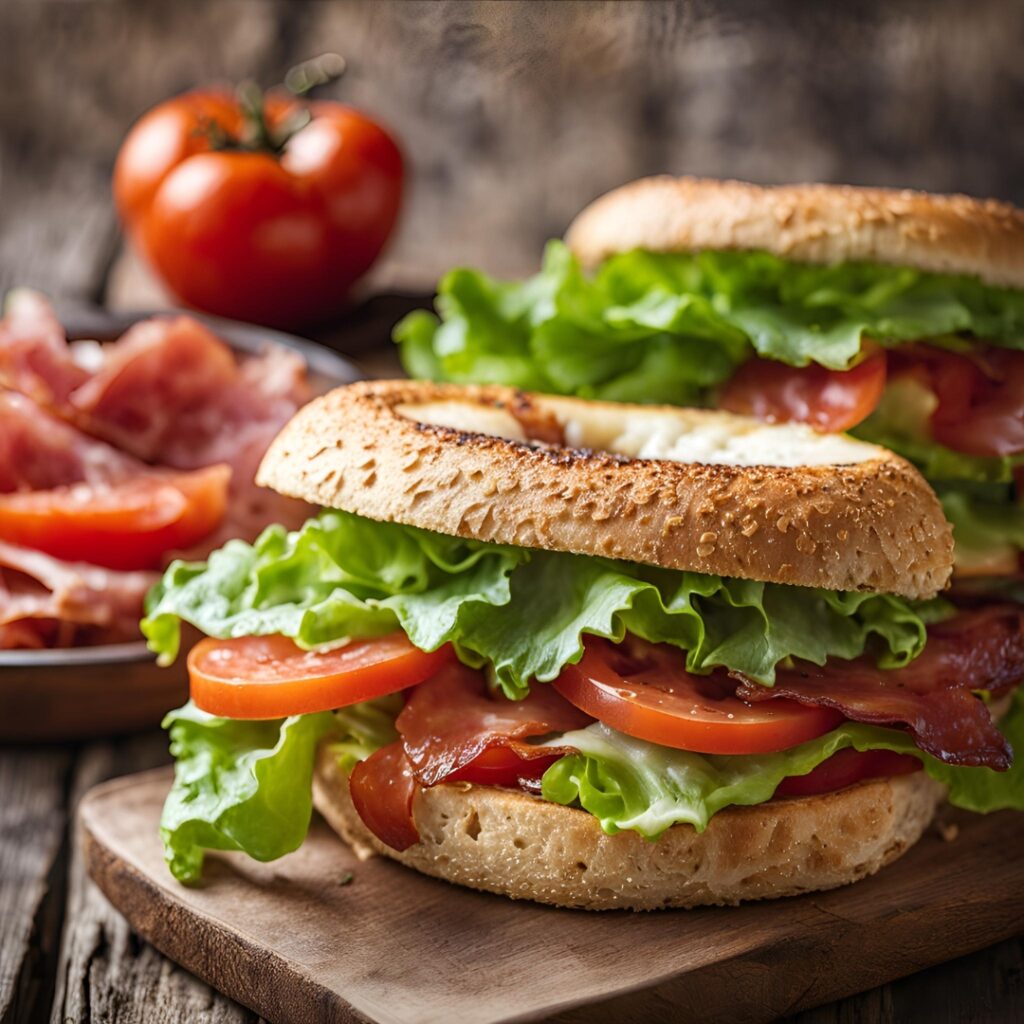
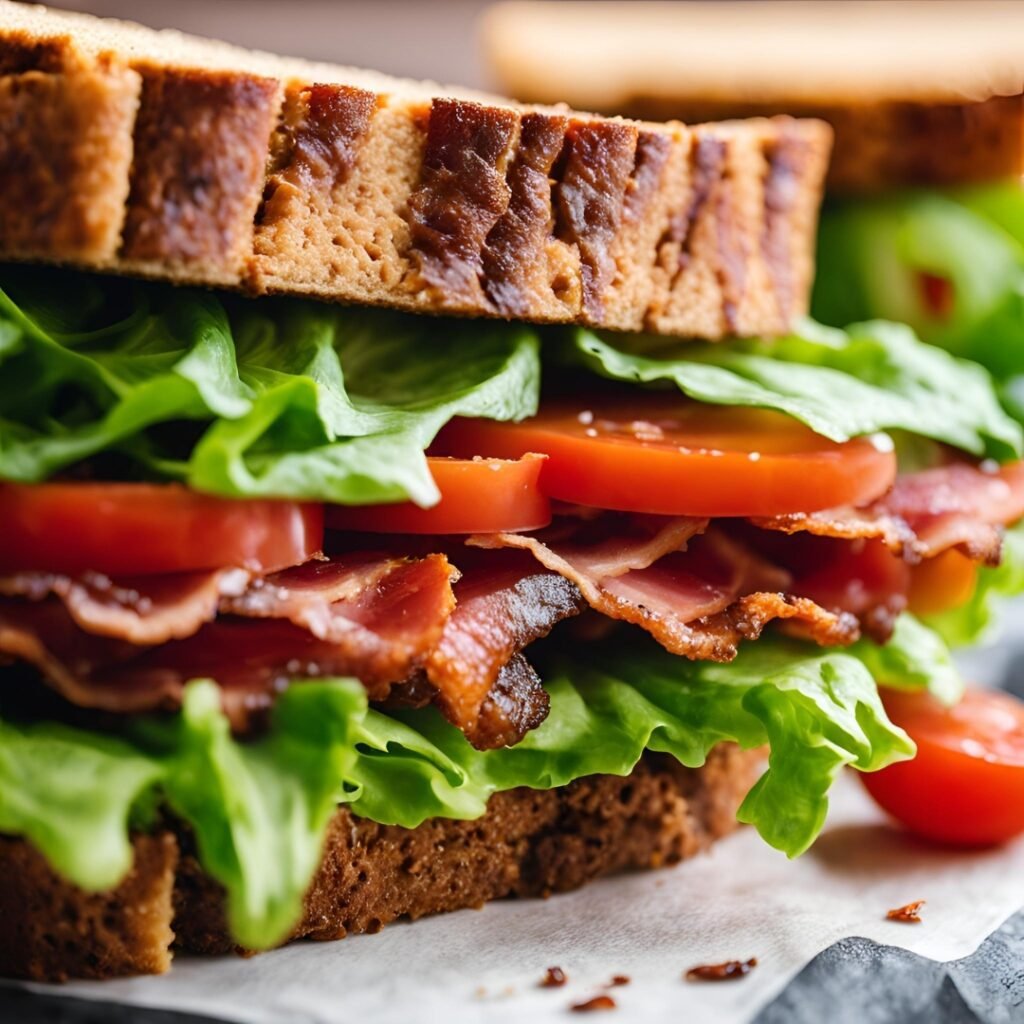
- Classic BLT with mayo and thick-cut bacon
- Tuna salad with celery, pickles, and full-fat mayo
- Grilled cheese with aged cheddar and Gruyère
Elegant Brunch & Special Occasion
- Open-faced smoked salmon with cream cheese and capers
- Egg salad with fresh dill and micro-greens
- Nut butter with sugar-free preserves and sliced strawberries
Lunch & Dinner Ideas
- Katsu sando (Japanese breaded pork cutlet sandwich) using keto breading
- Pulled pork sliders with coleslaw
- Grilled chicken club with bacon and ranch
- Meatball sub with marinara and mozzarella
Keeping It Fresh
How Do You Store Keto Sourdough Milk Bread?
Room Temperature Storage
Keep in an airtight container or sealed bag for up to 3 days at room temperature. Best for maintaining soft texture if consuming within a few days.
Refrigerator Storage
Wrap tightly in plastic wrap or store in an airtight container for up to 7 days. Toast before serving to restore softness — refrigeration can firm the crumb slightly.
Freezer Storage
Wrap individual slices in plastic wrap, then place in a freezer bag for up to 3 months. Thaw at room temperature for 30 minutes or toast directly from frozen. For whole loaf freezing, wrap tightly in plastic then aluminum foil.
Pro Tip: Slice the entire loaf before freezing so you can grab individual slices for toast without thawing the whole loaf — perfect for meal prep efficiency.
Setting Expectations
The Practice Recipe: Master Your First Bake
Always think of your first bake as a practice bake. Why? Because every oven, every ingredient brand, and every baker’s palate is different.
Oven Variations
Your oven’s actual temperature may differ from the dial by 10–25°F. A $15 oven thermometer solves this. Older ovens often run cooler; newer convection ovens may bake faster. Start checking at 25 minutes instead of 30 on your first attempt.
Ingredient Brands Matter
Different brands of vital wheat gluten absorb liquid differently. Bob’s Red Mill behaves differently than Anthony’s. Same with psyllium husk — some brands gel more aggressively. Your first bake teaches you how your specific ingredients interact.
Your Taster Type Matters
Non-tasters (roughly 25% of people) have fewer taste buds and prefer bolder flavours — you might want extra Swerve or salt
Medium tasters (roughly 50% of people) experience average sensitivity — the recipe as written should work perfectly
Super tasters (roughly 25% of people) have heightened sensitivity to bitterness and sweetness — you may prefer less sweetener or a lighter hand with sourdough tang
Practice Bake Strategy
- Follow the recipe exactly as written
- Take notes on texture, rise, browning, and flavour
- Adjust one variable at a time on your second bake
- Find your perfect version by bake three
This isn’t failure — it’s customization. Professional bakers test recipes dozens of times. You’re simply dialing in your personal perfect loaf.
Keto Sourdough Milk Bread Recipe
Discover how to make authentic keto Japanese milk bread (shokupan) with only 2.3g net carbs per slice. This sourdough-enhanced recipe delivers the ultra-soft, pillowy texture you crave without the carbs. Note that this recipe makes 2 loafs.
You can use either Fairlife skim or whole milk. The only difference is the calories and fat in the whole milk, being higher. The carbs are the same for both. You can also substitute the Fairlife milk with almond or coconut milk, however this alters the taste.
- Prep Time: 2.5 hours
- Cook Time: 25 to 30 Minutes
- Total Time: 3 hours 10 minutes
- Yield: 12 Per Loaf
- Category: Discard Recipes
- Method: Baking
- Cuisine: Keto Sourdough Discard
- Diet: Diabetic
Ingredients
Wet Ingredients
- 1 1/2 cups Fairlife Skim or 3% Milk, warmed (480 mL) (or almond or coconut milk)
- 1 tablespoon instant yeast (10–11 g)
- 1 teaspoon sugar (4 g)
- 3 large eggs
- ¼ cup cream cheese, softened (60 g)
- 1 cup Biome Boss™ Living Starter (240 g)
- ¼ cup unsalted butter, softened (57 g)
Dry Ingredients
- 2 cups + 2 tablespoons vital wheat gluten (250 g)
- 1 cup almond flour + 2 tablespoons coconut flour, sifted together (110 g + 16 g)
- 3 tablespoons whole psyllium husks
- 1 tablespoon double acting baking powder (12 g)
- 1 teaspoon healthy salt (6 g)
- 1/4 cup powdered Swerve (24 g)
Egg Wash
- 1 egg yolk
- 2 tablespoons Fairlife Skim Or 4% Milk (30 mL)
Instructions
- Combine Milk, Yeast, and Sugar: Pour warm Fairlife Skim milk into stand mixer bowl. Add instant yeast and sugar, stirring briefly to dissolve.
- Add Eggs and Remaining Wet Ingredients: Add 4 eggs and mix lightly. Then add softened cream cheese, Biome Boss™ Living Starter, and butter. Mix on low speed for 10-15 seconds just until loosely combined.
- Add Dry Ingredients: Sift almond flour and coconut flour together. Add vital wheat gluten, the sifted almond-coconut flour mixture, whole psyllium husks, baking powder, salt, and powdered Swerve on top of wet ingredients. Mix on low speed with beater attachment for about 2 minute until a shaggy dough forms.
- Rest (Autolyse): Cover bowl with t-towel and let rest for exactly 30 minutes at room temperature. The vital wheat gluten will tighten, psyllium will form a gel, and the dough will become firmer and smoother.
- Knead: Knead on medium-low speed for about 5 minutes. If the dough is too wet, add 1 to 2 tablespoons whole psyllium husks. Mix into the dough. Remove the bowl and let sit in the refrigerator to stiffen for about 15 minutes. If dough is too dry add 1 tablespoon milk at a time to moisten the dough so it pulls together. Knead for about 8 minutes until dough becomes smooth, elastic, and slightly tacky (not sticky).
- Perform the windowpane test—stretch a small piece of dough; it should form a thin, translucent membrane without tearing. If too soft, add 1 tablespoon psyllium again. If too firm, add 1–2 teaspoons warm milk.
- Shape: Divide dough into 2 equal portions (use a kitchen scale for precision). Roll each portion into a tight ball by tucking edges underneath and rolling in circular motions. Divide each portion into 3 balls. Stretch and fold each piece of dough at least 6 times to create tension on the top of the dough. Repeat for all 6 pieces.
- Spray 2 silicon bread pans with non stick avocado spray.
- Place 3 balls in each bread pan. Push them down slightly so they touch.
- Second Proof: Proof for 60 to–80 minutes until dough reaches ¾ pan height.
- Bake: Preheat oven to 350°F (180°C) while dough finishes proofing. Brush top with egg wash for that signature golden sheen.
- Bake for 25 to 30 minutes until tops are golden internal temperature reads 190–200°F (90–94°C). Tent with foil if browning too quickly after 20 minutes.
- Turn off the oven and leave the bread in the oven. This keeps the bread from deflating too much.
- Cool Completely: Cool in pan for 10 minutes to set the structure. Transfer to wire rack and cool completely for 2 hours before slicing—this prevents gummy texture. The loaf should sound hollow when tapped on the bottom.
Notes
NUTRITIONAL VALUES:
Note: All nutritional values shown are estimates only. Actual values may vary based on ingredient brands, product formulations, measuring methods, and nutritional standards in different countries. The totals will also change if ingredients are substituted—especially if Fairlife milk is replaced with almond milk, coconut milk, or any other alternative. So be sure to do your own calculations.
✅ Full Recipe (2 Loaves = 24 Slices) — Base Values (Using Skim)
- Calories: 3,149.6 kcal
- Fat: 170.9 g
- Total Carbs: 94.32 g
- Fiber: 38.10 g
- Net Carbs: 56.22 g
- Protein: 297.23 g
- Sodium: 3,000 mg
✅ Change If Using Fairlife 4% (Whole)
- Calories: +30 kcal total
- Fat: +3.5 g total
(Carbs, fiber, net carbs, protein, sodium stay the same.)
✅ Per Loaf (1 Loaf) — Base Values (Using Skim)
- Calories: 1,574.8 kcal
- Fat: 85.46 g
- Total Carbs: 47.16 g
- Fiber: 19.05 g
- Net Carbs: 28.11 g
- Protein: 148.62 g
- Sodium: 1,500 mg
✅ Change If Using Fairlife 4% (Whole)
- Calories: +15 kcal per loaf
- Fat: +1.75 g per loaf
✅ Per Slice (1 of 24) — Base Values (Using Skim)
- Calories: 131.2 kcal
- Fat: 7.12 g
- Total Carbs: 3.93 g
- Fiber: 1.59 g
- Net Carbs: 2.34 g
- Protein: 12.38 g
- Sodium: 125 mg
✅ Change If Using Fairlife 4% (Whole)
- Calories: +1.25 kcal per slice
- Fat: +0.073 g per slice
Responses