
Keto Sourdough and Menopause: Top 10 Questions Answered


Sinless Sourdough™
Keto Sourdough and Menopause
The Top 10 Questions Answered
Menopause changes your body in real, measurable ways — where you store fat, how much muscle you retain, and how your blood sugar behaves. This isn’t about willpower or a diet gone soft. It’s hormonal, and understanding the actual mechanisms is what makes food choices useful instead of guesswork.
Why Sinless Sourdough Created This Approach
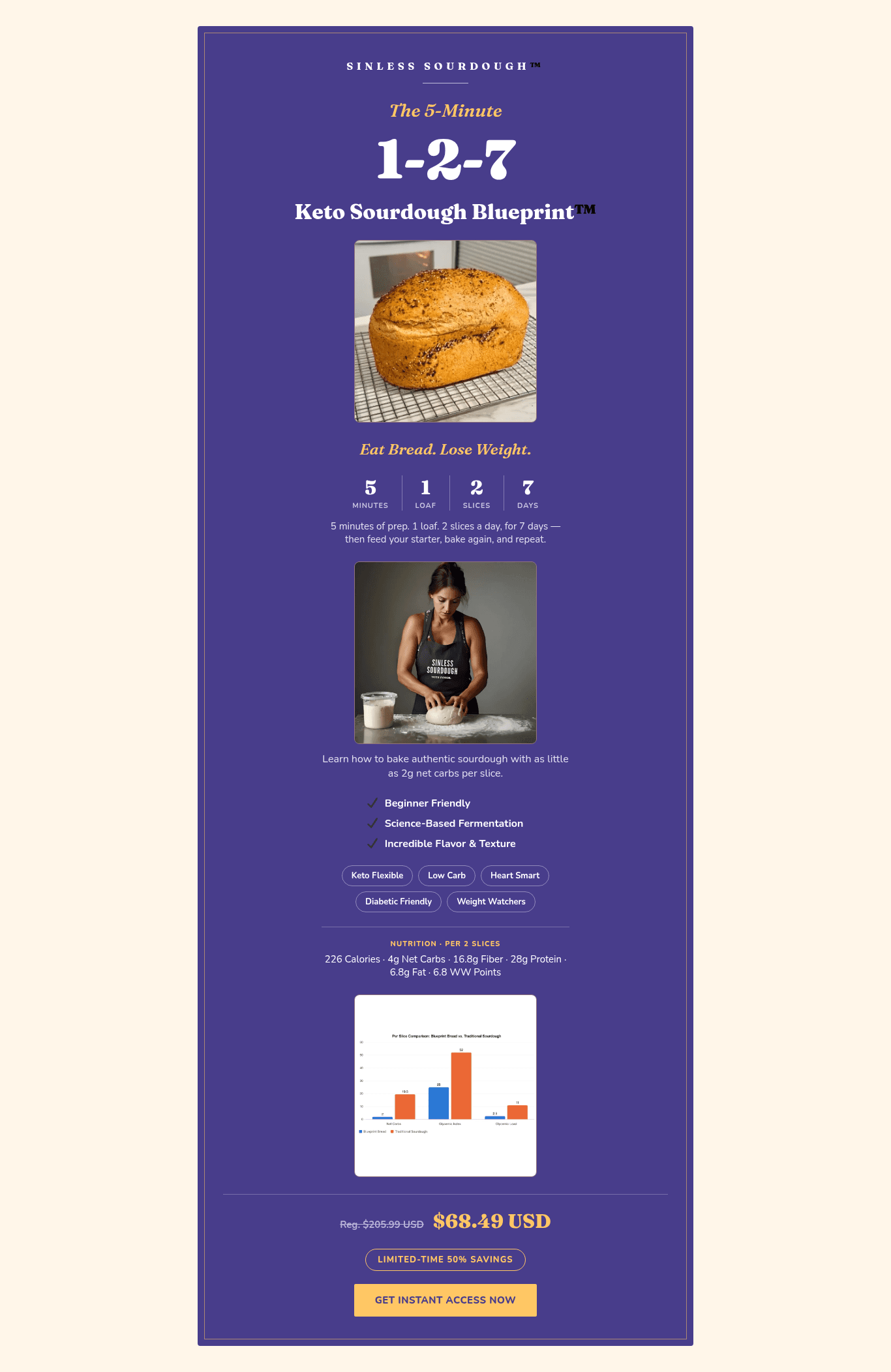
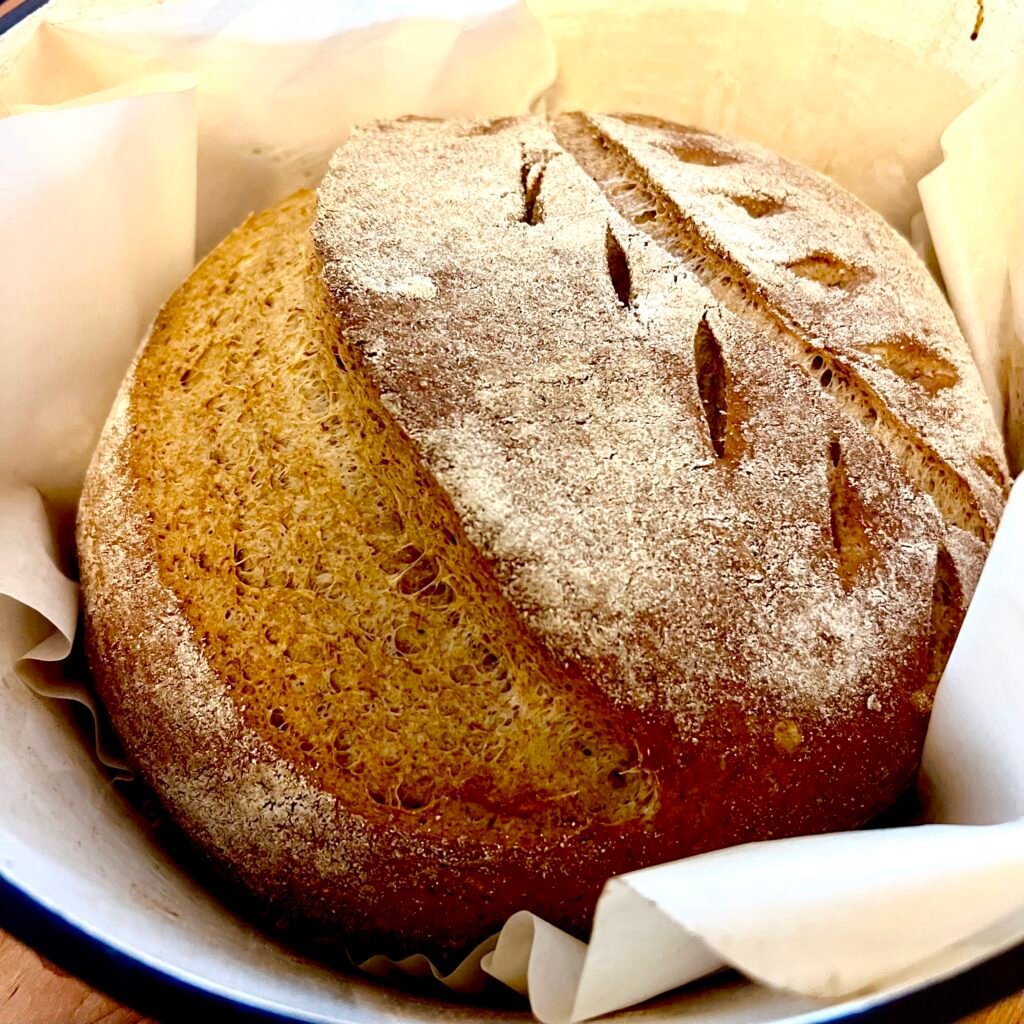
Sinless Sourdough focuses on keto sourdough for people who don’t want to give up bread while paying closer attention to carbohydrates, protein, fibre, and overall nutrition. Our 5-Minute 1-2-7 Keto Sourdough Blueprint™ was developed around that approach, combining real sourdough fermentation with a lower-net-carb, higher-protein bread formula — which is exactly the combination this page has been walking through, question by question, for the specific hormonal shifts of menopause.
Written by Shari MAC, CEO and founder of Sinless Sourdough. 30+ years in the food and wine industry, international award-winning cookbook author, former syndicated food and wine journalist. Shari developed the Flexible Keto approach to sourdough after losing over 70 lbs and shifting her own work from gourmet food and wine to low-carb baking.
Not medical advice. This page explains general research on menopause and metabolism. It is not a treatment for menopause symptoms, weight gain, or any condition, and it doesn’t replace a conversation with your doctor — particularly around hormone therapy options, which diet alone does not replace.
https://sinlesssourdough.com/shop/
1. What Happens to Your Body During Menopause That Makes Diet More Important?
Declining estrogen during the menopause transition does three documented things: it shifts where your body stores fat, it accelerates the loss of muscle mass, and it raises cardiovascular risk. These are physiological changes, not a story about discipline.
Diet doesn’t cause these changes and can’t fully control them — but the right food choices can support your body through them, which is what the rest of this page is about.
2. Why Does Menopause Cause Belly Fat Specifically?
Estrogen, particularly estradiol, influences where your body prefers to store fat. During reproductive years, it directs fat toward the hips, thighs, and buttocks as subcutaneous fat. As estrogen declines through the menopause transition, fat storage shifts toward the abdomen instead — visceral fat, the deeper fat surrounding your internal organs.
This shift matters beyond appearance: visceral fat is metabolically active tissue linked directly to insulin resistance, cardiovascular disease, and type 2 diabetes risk.
3. Why Is Protein So Important During Menopause?
Estrogen receptors are present in muscle tissue and support muscle protein synthesis. As estrogen declines, that support declines too, accelerating age-related muscle loss known as sarcopenia. Because muscle is more metabolically active than fat, less muscle mass means a lower resting metabolic rate — part of why the same eating pattern can affect the scale differently before and after menopause.
Some research also suggests the hormonal shifts of menopause produce a period of net protein breakdown, which may specifically increase appetite for protein-rich foods. Clinicians commonly cite roughly 1.2 to 1.6g of protein per kg of body weight daily to help support muscle retention during this stage.
4. Why Does Lower Fat Matter During Menopause?
Estrogen normally helps activate your body’s fat-burning machinery — through oestrogen receptor-alpha, it promotes the uptake, mitochondrial shuttling, and oxidation of fatty acids in skeletal muscle, fat tissue, and the liver. As estrogen declines, the genes driving that fat-oxidation capacity (including PGC-1α and ERRα) become downregulated.
This isn’t just theoretical — a controlled study directly measured decreased whole-body fat oxidation during exercise in postmenopausal women compared to premenopausal women, and found that estrogen supplementation could restore that oxidative capacity. In practical terms: your body’s ability to burn dietary fat as fuel is genuinely reduced during this transition, which is why being mindful of fat intake — not eliminating it, but not overdoing it — makes more practical sense now than it may have earlier in life. Fat you can’t efficiently oxidize is more likely to be stored.
5. How Does Fibre Help During Menopause?
Fibre supports satiety and blood sugar stability generally. More specifically to menopause, research has linked higher plasma acetate — a byproduct of gut bacteria fermenting fibre — to reduced cardiovascular risk in women with early menopause.
There’s also active research into the “estrobolome” — the collection of gut bacteria involved in estrogen metabolism — and its relationship to fibre intake. This is a genuinely emerging area of science without one settled conclusion yet, so we’re not going to overstate what it proves. What’s better established is fibre’s role in satiety and cardiovascular support.
6. Does Blood Sugar Really Affect Belly Fat During Menopause?
It’s one contributing factor among several — not the whole explanation, and it’s worth being accurate about that. The primary driver of menopausal visceral fat is the direct effect of declining estrogen on where your body stores fat, described in Question 2.
Insulin resistance and blood sugar swings can compound that shift, since visceral fat itself worsens insulin resistance, and insulin resistance can worsen fat storage — but they’re a contributing piece, not the sole cause of menopausal weight changes.
7. Why Do Blood Sugar Swings Trigger Cortisol?
A sharp blood sugar spike is often followed by a rapid fall. When blood sugar drops quickly, your body releases counter-regulatory hormones — cortisol among them — to help bring glucose levels back up.
Chronically elevated cortisol is well documented to promote fat storage specifically in the abdominal region. This is a real mechanism — but it’s one piece feeding into the larger estrogen-driven pattern described above, not a separate or bigger cause on its own.
8. Does Low Net Carb Bread Help With Menopause Weight Changes?
Choosing bread with fewer net carbs may help moderate the blood sugar swings described in Question 7, which is one piece of a larger picture that also includes estrogen-driven fat redistribution and muscle loss. It is not a treatment for menopause symptoms or weight gain on its own, and it works alongside — not instead of — the broader picture, including medical guidance where appropriate.
9. What Does This Mean for Choosing Bread During Menopause?
Putting the pieces together: a bread that’s higher in protein, higher in fibre, lower in net carbs, and moderate in fat touches several menopause-related concerns at once —
• Protein supports muscle retention as estrogen-driven muscle loss accelerates
• Fibre supports satiety and has been linked to cardiovascular benefits specifically in early menopause
• Fewer net carbs may help moderate blood sugar swings that contribute to abdominal fat storage
• Moderate fat works with, rather than against, a fat-oxidation capacity that’s naturally reduced during this transition
10. What Are the Numbers for the Blueprint Bread, and How Do They Fit This Pattern?
Per 2 slices: ~28g protein • ~16.8g fibre • ~4g net carbs • ~6.8g fat • ~226 calories
That combination aligns with the general dietary pattern discussed throughout this page — but it doesn’t guarantee any particular outcome for any individual. Menopause is hormonally driven and highly individual; bread is one input among many, not a substitute for medical care.
Related Questions You Might Ask Next
Ready to Try Real Sourdough?
The 5-Minute 1-2-7 Keto Sourdough Blueprint™ ships with your Biome Boss™ starter, the full video course, and a surprise bonus — free shipping to Canada and the USA.
Sources
These sources describe general research on menopause, metabolism, and diet. They are background information, not proof that any specific product will produce these effects for you.
“The Connection Between Menopause & Belly Fat.” University Hospitals. uhhospitals.org
“Menopause is associated with decreased whole body fat oxidation during exercise.” American Journal of Physiology-Endocrinology and Metabolism. journals.physiology.org
Simpson, S.J. et al. “Weight gain during the menopause transition: Evidence for a mechanism dependent on protein leverage.” BJOG, 2023. obgyn.onlinelibrary.wiley.com
“Acetate, a fibre-derived gut metabolite, is associated with reduced cardiovascular disease risk in females with early menopause.” medRxiv, 2026. medrxiv.org
“Diet, the Gut Microbiome, and Estrogen Physiology: A Review in Menopausal Health and Interventions.” PMC, 2026. pmc.ncbi.nlm.nih.gov/PMC13074627
Disclaimer
This page is for education only. It is not medical advice and does not diagnose, treat, cure, or prevent menopause symptoms, weight gain, or any condition. Menopause is a hormonal transition with wide individual variation. If you’re experiencing significant symptoms or weight changes, speak with your doctor, who can discuss the full range of options, including hormone therapy.
The mechanisms referenced above (estrogen and fat distribution, muscle protein synthesis, fibre fermentation, cortisol) reflect general, established or emerging research. They explain how these mechanisms generally work — they are not a guarantee of how any specific food will affect your individual health. Statements on this page have not been evaluated by the Food and Drug Administration.





Responses