
KETO SOURDOUGH BACON CHEDDAR CHIVES (BREAD MACHINE)

The Keto Baking Mechanic™ — Recipes
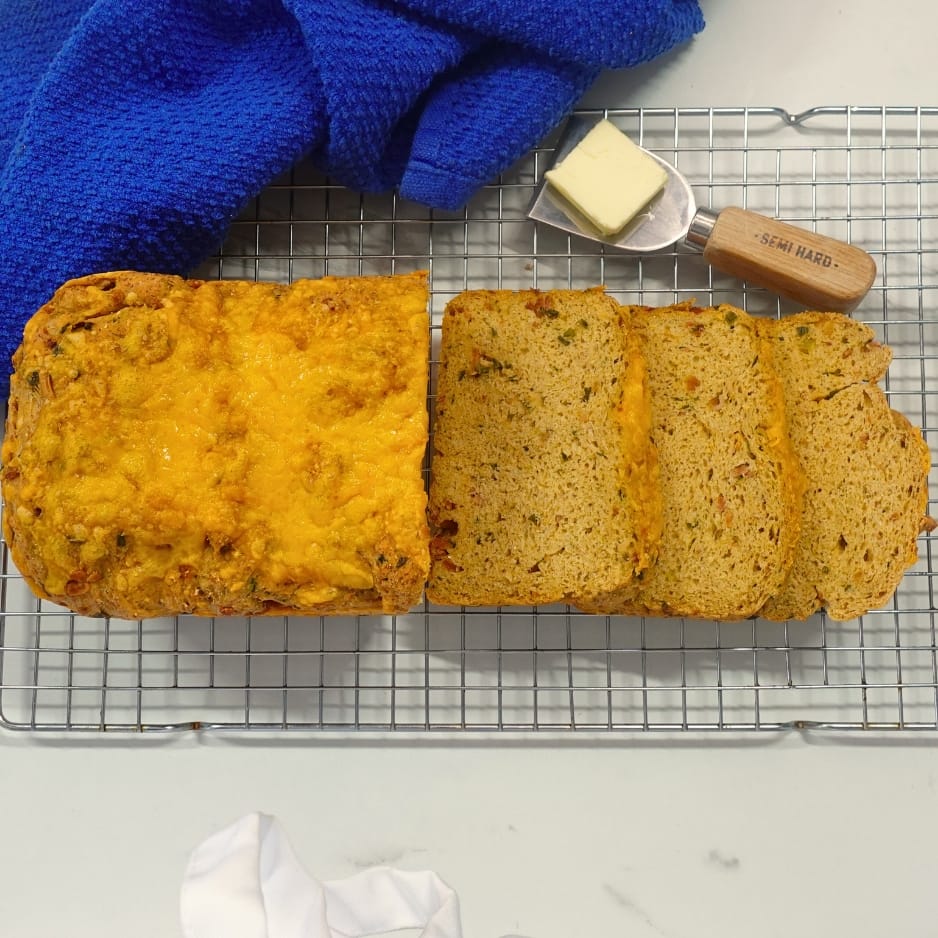
Keto Sourdough Cheddar Bacon Bread
Where We Create, Tweak and Enhance
Keto and Low Carb Breads and Baked Goods
What Makes This Keto Sourdough Recipe Different
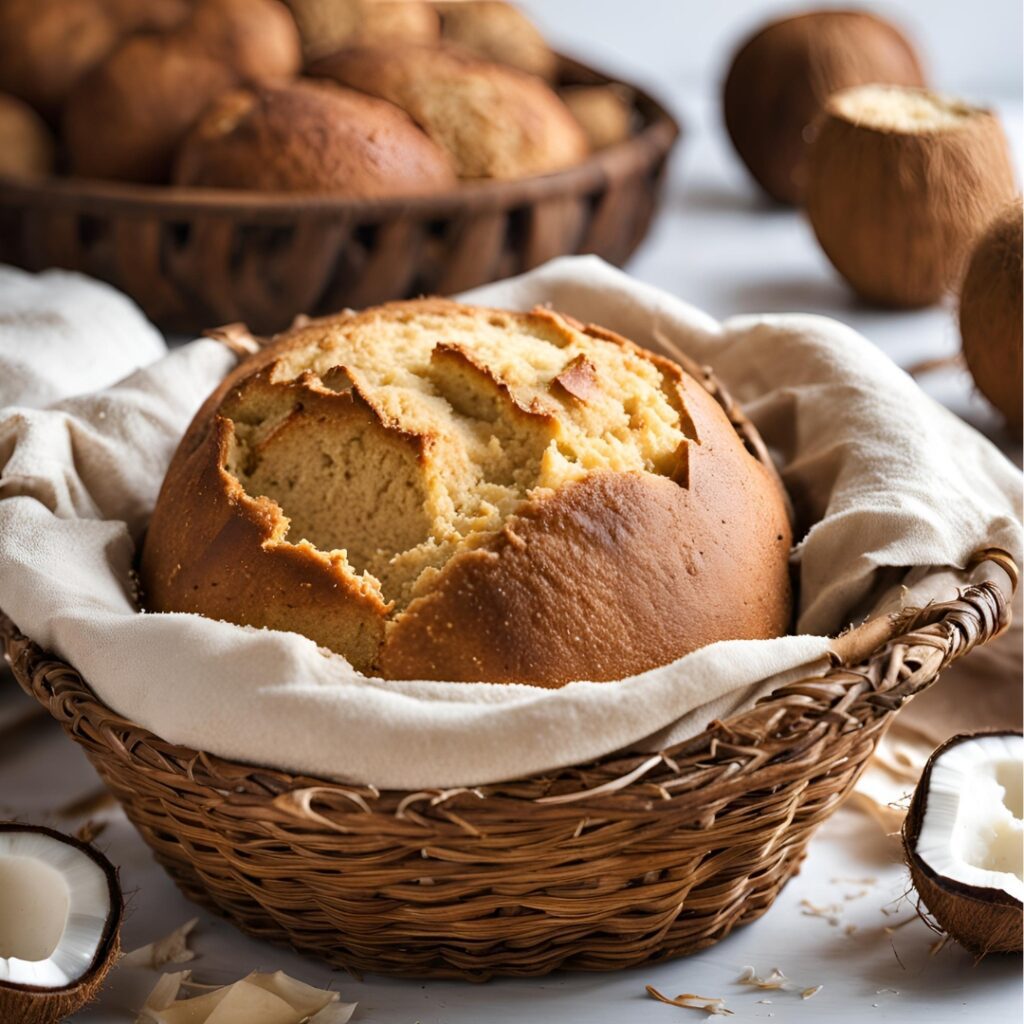
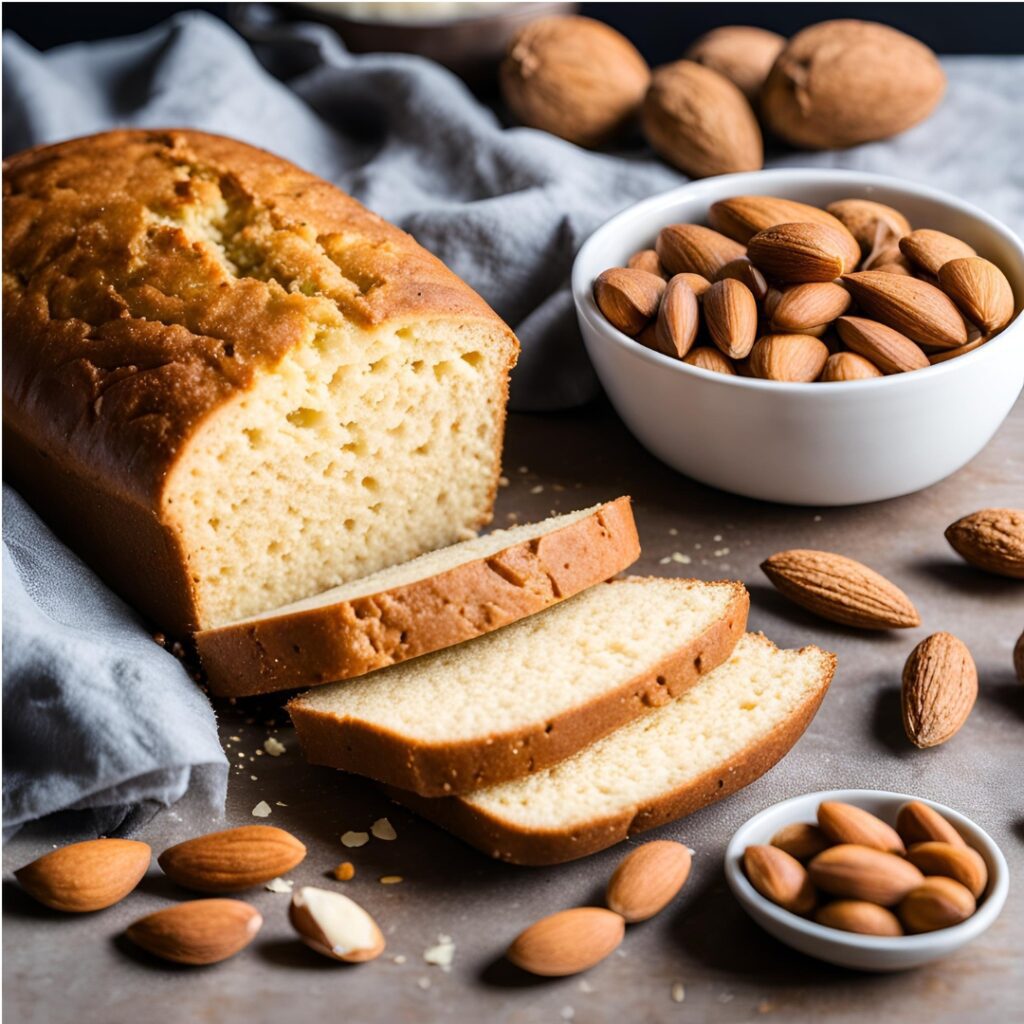
Most keto bread recipes depend heavily on almond flour or coconut flour. While those ingredients have their place, they often produce breads that are fragile or cake-like.
This Keto Sourdough Cheddar Bacon Bread works differently. It combines:
- Vital wheat gluten for structure
- Fibre hydration from oat fibre and psyllium
- Authentic sourdough fermentation flavour
This approach produces a loaf that behaves much closer to traditional bread while still remaining low in net carbohydrates.
Adding bacon, Cheddar, curds, and chives transforms the bread into a savoury loaf ideal for sandwiches, toast, or served alongside soups and salads.
Sourdough starters and supplies available at sinlesssourdough.com/shop/
sinlesssourdough.com/shop/
The Science
Why Keto Sourdough Works
The success of Keto Sourdough bread depends on three structural systems working together.
Gluten Structure: Vital wheat gluten forms the elastic protein network that gives bread its ability to rise and hold shape.
Fibre Hydration: Oat fibre and psyllium husks absorb water and create a stabilizing gel that replaces the structural role starch normally plays in traditional bread.
Fermentation: Sourdough cultures produce organic acids that contribute flavour and improve dough stability.
Together, these systems produce a bread with structure, flavour, and sliceability that many keto breads struggle to achieve.
What to Expect
Taste & Texture
This loaf delivers a rich savoury profile:
- The bacon adds smoky depth
- Cheddar cheese melts into the crumb creating pockets of flavour
- Cheddar curds add bursts of cheese throughout the loaf
- Dried chives add a subtle aromatic finish
When toasted, slices become crisp on the outside and soft inside, making them ideal for sandwiches, breakfast toast, or savoury spreads.
Using Discard
Fermentation Context
Even when using sourdough discard, fermentation still plays an important role in flavour development. Sourdough cultures produce organic acids that contribute tang and complexity to bread. These acids also influence dough behaviour and help stabilize gluten structure.
Using discard allows bakers to incorporate these flavour benefits into bread machine recipes without requiring long fermentation schedules.
Digestibility Positioning
Fermentation changes the internal structure of bread dough over time. During fermentation, microbial activity interacts with carbohydrates and proteins within the dough. This process contributes to flavour development and structural changes within the bread matrix.
While keto sourdough breads differ from traditional flour-based sourdough loaves, incorporating fermentation remains an important part of the Sinless Sourdough™ baking philosophy.
Philosophy
About Measurements & Precision in Keto Sourdough
Traditional baking often teaches that cooking is art, but baking is science — meaning it must be precise. That’s why many bakers prefer weighing ingredients in grams instead of using cups.
Keto sourdough baking does not follow that traditional model.
Sinless Sourdough™ is a living fermentation system. Your starter changes daily depending on hydration, environment, temperature, feeding cycle, and ingredient brand. Because of this, no two bakes are ever identical.
You may use cups. You may use grams. What matters most is hydration and dough behaviour.
Gram measurements listed in Sinless™ recipes are approximate reference points based on commonly available brands. However, ingredient density varies depending on brand, grind size, humidity, and storage conditions. This is especially true for oat fibre, vital wheat gluten, psyllium husks, and active starter. Your starter’s weight will vary depending on how aerated or dense it is when measured.
The goal is not to hit an exact number on a scale. The goal is to build proper dough structure.
Watch your shaggy dough. If it doesn’t pull together, add hydration gradually. If it’s too loose, adjust dry ingredients slowly. Sinless Sourdough™ is not about rigid precision — it is about learning to read your dough.
The Starter
Starter Used in This Recipe
This Keto Cheddar Bacon Sourdough recipe was developed using the 1849 San Francisco Gold Rush starter fed with vital wheat gluten and oat fibre.
Unlike traditional sourdough starters that are fed with wheat flour, the Sinless Sourdough™ system uses low-carb feeding strategies that maintain an active fermentation culture while supporting keto baking. The 1849 San Francisco Gold Rush starter produces a classic sourdough flavour profile with balanced acidity and reliable fermentation activity.
This recipe will work with any starter from the Global Heritage Collection, provided the starter has been maintained using vital wheat gluten and oat fibre feedings. Because these starters share compatible microbial ecosystems, they behave consistently within keto sourdough dough systems.
What’s In It
Ingredient Breakdown
- Spring water: provides hydration needed for gluten development and fibre gel formation
- Biome Boss™ discard: contributes sourdough fermentation flavour and organic acids
- Eggs: add protein structure and richness
- Olive oil or avocado oil: improves crumb softness and moisture retention
- Oat fibre and psyllium husks: create the structural fibre network needed for keto breads
- Vital wheat gluten: forms the primary protein framework of the loaf
- Sugar: supports yeast activation during the initial fermentation stage
- SAF instant yeast: ensures reliable rise inside the bread machine
- Bacon, Cheddar cheese, Cheddar curds, and chives: provide the savoury flavour profile
What You’ll Need
Equipment
This recipe works well in most 2-lb bread machines, especially horizontal machines. Examples include:
- Zojirushi bread machines
- KBS bread machines
- Other horizontal dual-paddle machines
Dual paddles typically provide better gluten development in keto doughs.
Let’s Bake
Step-by-Step Instructions
Heat the spring water in the microwave for 30 seconds until lukewarm but not hot.
Add the warm water, discard (or starter), beaten eggs, and oil to the bread machine pan.
In a small bowl, whisk together the oat fibre and whole psyllium husks.
Sprinkle the fibre mixture evenly over the wet ingredients and allow it to sit for 5 minutes to hydrate.
Evenly layer the vital wheat gluten over the hydrated fibre mixture.
Sprinkle the salt around the outer edges of the dry ingredients.
Sprinkle the sugar and baking powder evenly over the gluten layer.
Make a small well in the centre of the dry ingredients and add the instant yeast.
Select the Basic or White cycle on the bread machine and choose the 2-lb loaf setting.
After 10–15 minutes of mixing, check the dough consistency.
Once the dough forms a shaggy mass, add the chopped bacon, shredded Cheddar, Cheddar curds, and dried chives.
After the first kneading stage finishes, open the lid and check the dough. If it is not shaped like a loaf, remove it from the pan, shape it to fit the pan, and place it back into the bread machine.
Allow the cycle to continue without opening the lid once baking begins.
When baking completes, remove the bread pan immediately.
Allow the loaf to rest in the pan for 10–15 minutes.
Remove the loaf and cool on a wire rack for at least 2 hours before slicing.
The finished loaf should reach an internal temperature of 205–210°F (96–99°C).
Avoid These
Common Mistakes
- Opening the lid during the baking stage can collapse the loaf
- Adding cheese too early can cause uneven mixing
- Skipping fibre hydration can lead to dense bread
- Not shaping the loaf after the first knead can cause uneven loaf structure
Make It Your Own
Variations
- Replace bacon with sausage or diced ham
- Add jalapeños with Cheddar for a spicy version
- Add pumpkin seeds or sunflower seeds for extra texture
By the Numbers
Nutrition
Entire Loaf
Calories: ~2,637 kcal • Total Carbohydrates: ~158g • Fiber: 123g • Net Carbs: ~35g • Protein: ~275g • Fat: ~129g
Per Slice (14 slices)
Calories: ~188 kcal • Total Carbohydrates: ~11.3g • Fiber: ~8.8g • Net Carbs: ~2.5g • Protein: ~19.6g • Fat: ~9.2g
Keeping It Fresh
Storage
Store the cooled loaf in an airtight container at room temperature for up to 3 days.
For longer storage, slice and freeze the bread. Individual slices can be toasted directly from frozen.
90 SECOND KETO MAGIC COOKIE
Master the 90 Second Keto Magic Cookie. A grain-free, chewy keto treat made with healthy fats and no added sugar. Microwave, air fryer, and oven methods included.
- Prep Time: 2 Minutes
- Cook Time: 90 seconds
- Total Time: 3 Minutes 30 Seconds
- Yield: 3
- Category: Dessert, Snack
- Method: Air Fryer, Baking, Convection Oven, Microwave, Toaster Oven
- Cuisine: American
- Diet: Diabetic, Gluten-Free, Keto, Low-Carb
Ingredients
- 2 Large Egg Yolks
- 1 Tbsp Coconut Oil: Provides healthy fats and helps the cookie harden when chilled. (Another 1/2 tsp if cookies not sticking together)
- 1 Tbsp Brown Sugar Sweetener
- 1/2 tsp Vanilla Extract
- 2 Tbsp Chopped Pecans & 2 Tbsp Chopped Walnuts
- 1/4 Cup Unsweetened Coconut Flakes
- 1/4 Cup Sugar-Free or No Sugar Added Chocolate Chips*
- 1/2 tsp Xanthan Gum
Instructions
- The Base: In a small bowl, whisk the Egg Yolks, Coconut Oil, Brown Sugar Sweetener, and Vanilla. Mix these together thoroughly until smooth.
- The Mix-ins: Add the Pecans, Walnuts, Coconut Flakes, and Chocolate Chips.
- The “Magic” Binder: Sprinkle the Xanthan Gum over the top of the mixture. Fold everything together until the dough starts to stick together and form a cohesive bond.
- Form & Cook: Spoon 3 cookie dough mounds onto a piece of parchment paper on a microwave-safe plate.
- The Setting Process: After cooking, let the cookies cool slightly on the plate, then place them in the refrigerator to harden. This chill is essential for the structure and “chew.”
Notes
Nutritional Value (Estimated per Cookie)
Please calculate your own nutritional values, as brands differ significantly. Additionally, the same brand will often have different values in Canada vs. the USA due to differing Health Canada and FDA regulations.
- Calories: 233 kcal
- Total Fat: 21g
- Net Carbs: 2.3g
- Protein: 3.3g
Disclaimer
All information provided on this website regarding the health benefits of sourdough low carb bread is intended for educational purposes only. The content presented is not meant to be taken as specific medical advice.
PrintKeto Sourdough Bacon Cheddar Bread Machine Bread
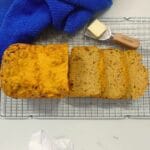
Keto Sourdough Cheddar Bacon Bread made in a bread machine using sourdough discard and heritage starter cultures. Savoury, high-protein, and low in net carbs.
- Prep Time: 5 to 10 Minutes
- Cook Time: 2.5 to 3 Hours
- Total Time: 3 hours 10 minutes
- Yield: 14 Slices
- Category: Breakfast, Dinner, Lunch, Side Dish, Snack
- Method: Bread Machine
- Cuisine: American
- Diet: Diabetic, Keto, Low-Carb
Ingredients
Wet Ingredients (Add First)
- 1 cup + 2 tbsp (270 ml) spring water, warmed 30 seconds (lukewarm, 73–77°F / 23–25°C)
- 1 cup (240 g) 1849 San Francisco Gold Rush Starter (fed vital wheat gluten + oat fiber)
- 2 large eggs, room temperature, beaten
- 2 tablespoons (30 ml) olive oil or avocado oil
Fiber Layer (Hydration Stage)
- ½ cup (50 g) oat fiber
- ¼ cup (28 g) whole psyllium husks
Remaining Dry Ingredients
- 1½ cups (180 g) vital wheat gluten
- 1 teaspoon (6 g) Celtic or Himalayan salt
- 1 teaspoon (4 g) sugar
- 1 teaspoon to 1 tablespoon (15 g) double-acting baking powder*
- 1 tablespoon (9 g) SAF instant yeast
Add-Ins (Added After Initial Mix)
- ½ cup chopped cooked bacon
- 1 cup shredded Cheddar cheese
- ½ cup Cheddar curds
- ¼ cup dried chives
Instructions
Notes
Estimated Nutrition
These values include the additions of ½ cup chopped bacon, 1 cup shredded Cheddar, ½ cup Cheddar curds, and ¼ cup dried chives and are calculated for 14 slices per loaf.
Entire Loaf (2 lb)
Calories: ~2,637 kcal
Total Carbohydrates: ~158 g
Fiber: 123 g
Net Carbs: ~35 g
Protein: ~275 g
Fat: ~129 g
Sugar: Negligible (consumed during fermentation)
Cholesterol: ~604 mg
Sodium: ~4,390 mg
Per Slice (14 slices)
Calories: ~188 kcal
Total Carbohydrates: ~11.3 g
Fiber: ~8.8 g
Net Carbs: ~2.5 g
Protein: ~19.6 g
Fat: ~9.2 g
Sugar: <1 g
Cholesterol: ~43 mg
Sodium: ~313 mg
Nutrition Disclaimer
These nutritional values are provided as guidance only. Please calculate your own values based on the specific brands and products you use, as nutritional information can vary significantly between brands and even between countries selling the same brands.

Responses