
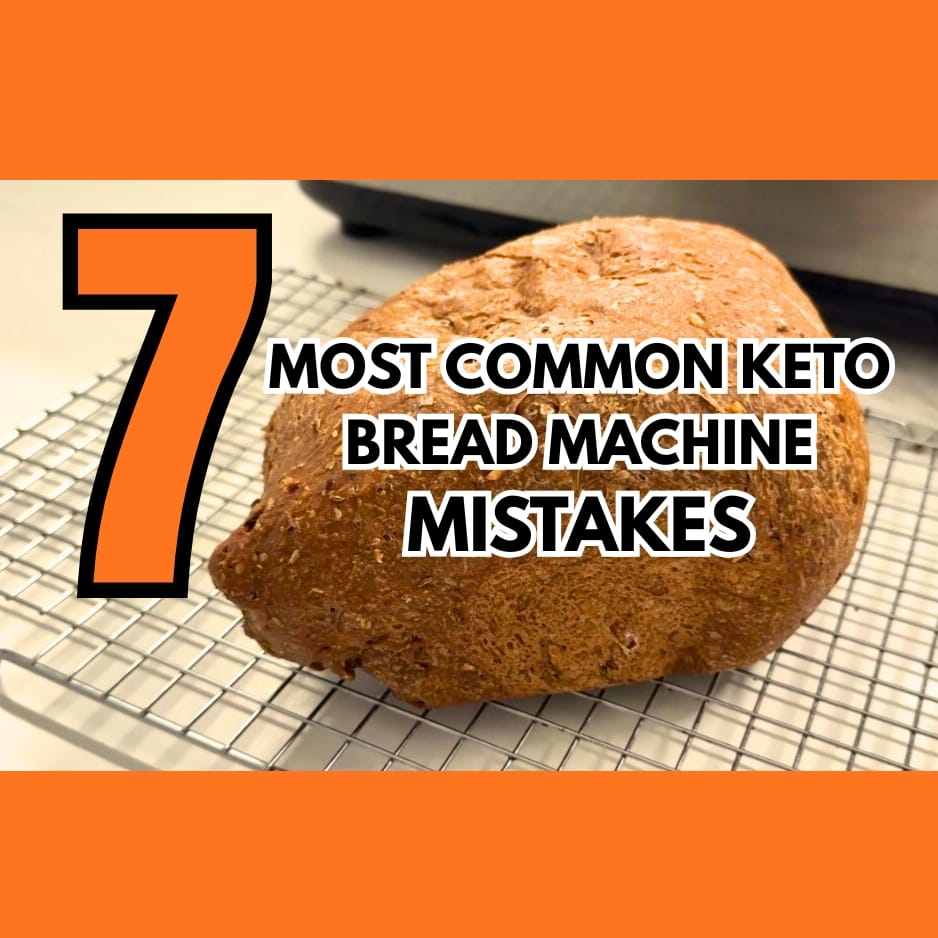
7 COMMON KETO BREAD MACHINE MISTAKES THAT ARE EASY TO AVOID

The Keto Baking Mechanic™ — Equipment
7 Keto Bread Machine Mistakes (Plus 1 Bonus Tip)
Where We Create, Tweak and Enhance
Keto and Low Carb Breads and Baked Goods
🍞 It’s Usually Not the Machine
Baking with a keto bread machine can produce excellent results when you understand how keto dough behaves inside the machine. Unlike traditional wheat bread, keto bread recipes rely on ingredients such as oat fibre, flax meal, psyllium husks, almond flour, and vital wheat gluten. These ingredients absorb water differently and affect how the dough rises, holds structure, and bakes.
When a loaf turns out dense, collapsed, gummy, or uneven, the problem is usually not the bread machine itself. Most issues come from a few simple process mistakes. Learning how a keto bread machine recipe behaves during mixing, fermentation, and baking makes the process much more predictable.
🎥 Watch the full video on The Keto Baking Mechanic™ YouTube channel: youtu.be/gVrGsXpTPhI

Recommended Equipment
Best Bread Machine for Keto Baking
Zojirushi Bread Machine.
Note: the actual Amazon URLs weren’t included in the source content — placeholder links are shown above until the real links are added.
Mistake #1
Putting the Bread Machine in the Wrong Location
What Happens: When a bread machine sits too close to walls, cabinets, or clutter, air cannot circulate around the machine.
Why It Matters: Poor airflow traps heat around the machine.
What It Causes: Uneven baking, overly dark crust, inconsistent loaf texture.
How to Handle It: Follow the placement instructions in your machine manual. Many machines, including Zojirushi models, require several inches of space around the unit so heat can dissipate properly.
Mistake #2
Ignoring Kitchen Temperature
What Happens: Yeast activity depends on the temperature of the dough, which is influenced by the temperature of the kitchen.
Why It Matters: Cold kitchens slow fermentation. Warm kitchens accelerate fermentation too quickly.
What It Causes: In a cold kitchen, yeast works slowly, dough rises poorly, and the loaf becomes dense. In a hot kitchen, dough rises too quickly, the structure weakens, and the loaf collapses.
How to Handle It: For consistent results with a keto bread machine, aim for a kitchen temperature of about 68–70°F (20–21°C).
Mistake #3
Not Checking the Dough After the First Mix
What Happens: During the first mixing cycle, the dough forms what bakers call shaggy dough.
Why It Matters: Keto ingredients such as oat fibre and gluten flour absorb water unevenly.
What It Causes: Dry pockets remain in the dough, ingredients mix unevenly, and the loaf becomes dense.
How to Handle It: Open the lid briefly during the early kneading cycle and check the dough. It should look rough but evenly combined.
Mistake #4
Not Adjusting Hydration at the Shaggy Dough Stage
What Happens: The shaggy dough stage is the ideal time to evaluate hydration.
Why It Matters: Keto dough requires proper hydration to develop structure.
What It Causes: Too little water creates a tight crumb structure and dense bread. Too much water creates weak dough structure, resulting in a collapsed or gummy loaf.
How to Handle It: Adjust hydration during the shaggy dough stage. If dough is too stiff, add 1 tablespoon liquid. If dough is too wet, add 1 tablespoon of the main dry ingredient.
Mistake #5
Allowing Gel Ingredients to Touch Liquid Too Early
What Happens: Ingredients like flax, chia, and psyllium are powerful gel-forming fibres.
Why It Matters: Many bread machines preheat ingredients for 20–30 minutes before mixing begins. If these ingredients sit in liquid during preheat, they begin forming a thick gel before mixing starts.
What It Causes: Clumpy dough, poor mixing, dense bread, reduced oven spring.
How to Handle It: Add gel-forming ingredients later in the dry ingredient layer, keeping them separated from liquid until mixing begins.
Mistake #6
Placing Salt and Baking Powder in the Wrong Spot
What Happens: Bread machines rely on ingredients being layered in a specific order.
Why It Matters: Salt and baking powder react with other ingredients if placed incorrectly.
What It Causes: Salt touching starter or discard slows fermentation and causes poor rise. Baking powder touching liquid during preheat causes early activation and reduced lifting power.
How to Handle It: Add salt after at least one dry ingredient layer and sprinkle it around the edges of the pan. Keep baking powder separated from wet ingredients until mixing begins.
Mistake #7
Expecting Oven Recipes to Work Exactly in a Bread Machine
What Happens: Oven baking and bread machine baking follow very different processes.
Why It Matters: Bread machines mix, ferment, and bake according to fixed programmed cycles.
What It Causes: Ingredients that work perfectly in oven baking may behave differently in a keto bread machine. For example, in an oven-baked keto sourdough loaf, 1 tablespoon baking powder may work well because the dough enters a hot oven immediately. In a bread machine, that same amount can release gas too early — the dough inflates before the structure sets, and the top of the loaf collapses.
Machine Differences Also Matter
Results can vary depending on:
- One paddle vs. two paddles
- Shape of the bread pan
- Machine brand
- Age of the machine
How to Handle It: Treat oven recipes as a starting point and adjust them based on how the dough behaves in your specific machine.
Bonus Tip
The Perfect Keto Bread Machine Dough Texture
One of the most important skills in keto bread machine baking is recognizing the correct dough texture. During the first kneading stage, the dough should form a soft, shaggy mass. The dough should hold together, appear slightly rough, and not look powdery or dry, and not spread like batter.
Signs the Dough Is Too Dry
- Stiff dough
- Crumbly texture
- Dry ingredients on the pan sides
Result: dense bread, poor rise
Signs the Dough Is Too Wet
- Dough spreads across the pan
- Sticky or batter-like texture
Result: large air pockets, collapsed loaf, gummy crumb
The Bottom Line
The Golden Rule of Keto Bread Machine Baking
The recipe gets you close — but the dough tells you the truth.
Ingredient brands, humidity, temperature, and machine differences all influence how keto dough behaves. Learning to observe the dough during the shaggy dough stage allows you to make small adjustments that dramatically improve the final loaf.
Once you master this skill, your keto bread machine loaves will become far more consistent and reliable.


Responses