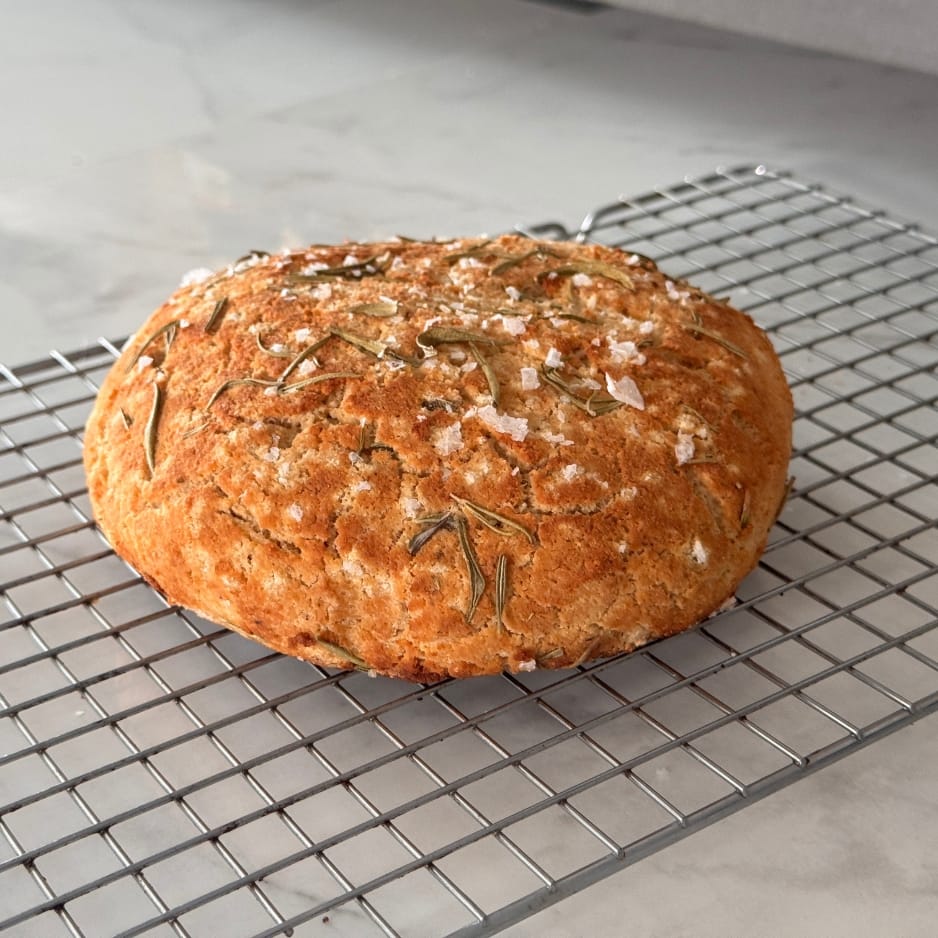
GLUTEN FREEE ROSEMARY AND SEA SALT KETO SOURDOUGH

The Keto Baking Mechanic™ — Recipes
Gluten Free Keto Sourdough Bread
Where We Create, Tweak and Enhance
Keto and Low Carb Breads and Baked Goods
🍞 Gluten free keto sourdough bread finally tastes the way you always hoped it would.
I know the frustration — you pull a loaf from the oven, tap the bottom, it sounds hollow, you slice in, and the centre is gummy. Again. That cycle ends here.
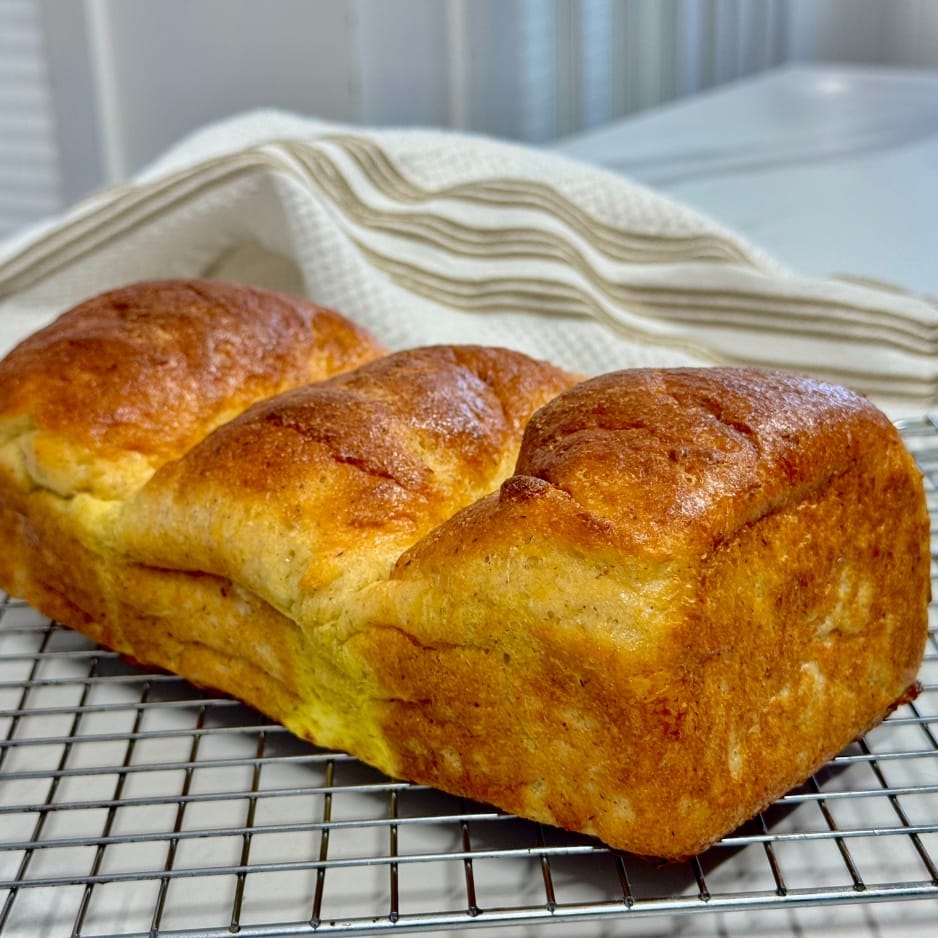
This gluten free keto sourdough bread uses a yeasted approach with Biome Boss™ sourdough discard for a taller, more open crumb, a crackly rosemary and sea salt crust, and a flavour that is genuinely satisfying. I have made this loaf more times than I can count, and every time I share it, someone asks me for the recipe.
A Note on “Keto” Labelling
This recipe is labeled keto because it’s designed to reduce blood sugar impact through ingredient choices and traditional fermentation methods — not because it requires strict dieting. Many people looking for healthier recipes, improved digestion, or more stable energy enjoy these recipes successfully, even if they don’t follow a ketogenic lifestyle.
This bread works because it leans on three pillars: ultra-fine blanched almond flour for structure and fat, oat fibre for a bread-like chew, and whey protein isolate to bind everything without gluten. The active dry yeast gives the loaf a genuine oven spring that most grain-free bread recipes simply cannot achieve. Add Biome Boss™ sourdough discard, and you get fermentation depth that no commercial flavouring can fake.
🎥 Follow The Keto Baking Mechanic on YouTube for more flexible keto recipes: @theketobakingmechanic
sinlesssourdough.com/shop/
The Appeal
Why You Will Love This Loaf
- Only ~2.4g net carbs per slice (12 slices per loaf)
- 8.7g protein per slice from whey isolate and almond flour
- No gums, no starches, no wheat — 100% grain-free
- Ready to slice in under 2 hours active time (plus cooling)
- Freezes beautifully for up to 3 months
Perfect for flexible keto bakers, keto beginners, and anyone avoiding gluten who refuses to settle for dense, flavourless bread.
The Difference
What Makes This Bread Different?
Most gluten free bread recipes fall into one of two traps: they are either gummy in the middle or dry and crumbly on the outside. Traditional wheat bread gets its tension from gluten. Without gluten, bakers reach for xanthan gum or tapioca starch — and the result is a loaf that feels artificial.
This recipe skips the gums entirely. Instead, whole psyllium husks build the binding network, while active dry yeast creates a real oven spring. The result is a loaf with an authentically open crumb and a crispy, herb-flecked crust you can actually hear when you slice it.
Traditional gluten free: relies on starches → high carb, gummy texture
Keto bread without yeast: dense, flat, no rise
This recipe: psyllium + yeast + sourdough discard → open crumb, genuine tang, proper crust
The Science
Why Does This Recipe Work?
- Mega Protein: 8g per slice from whey protein isolate and almond flour
- Ultra Low Net Carbs: Only ~2.4g net carbs per slice
- Simple Ingredients: Available at most health food stores or online
- Meal Prep Friendly: Freezes for up to 3 months, sliced
- Dual Leavening: Yeast + baking powder for reliable rise every time
- Fermentation Depth: Biome Boss™ discard adds tang and complexity without an overnight wait
Why It’s Valuable
Qualities of the Main Ingredients
Ultra-Fine Blanched Almond Flour
- Low Glycaemic Index: Almond flour has a GI near 0, which may help support stable blood sugar levels
- Heart-Healthy Fats: Rich in monounsaturated fats that may support cardiovascular health
- Vitamin E: One of the best plant-based sources of antioxidant Vitamin E
Oat Fibre
- Zero Net Carbs: Pure insoluble fibre — it passes through the digestive system without raising blood sugar
- Improved Texture: Adds a wheat-like chew to grain-free bread without the carbs
- Prebiotic Support: May help feed beneficial gut bacteria, supporting digestive health
Whey Protein Isolate
- Complete Amino Acid Profile: Contains all essential amino acids for muscle maintenance
- Structure Builder: Mimics gluten’s binding role in flexible keto baking for a cohesive crumb
- Fast-Digesting Protein: May support satiety and meal prep efficiency
Why this combination works: almond flour provides fat and moisture, oat fibre adds structure without carbs, and whey protein binds it all together. Together, they may support stable energy, lasting satiety, and a blood-sugar-friendly loaf that actually feels like bread.
Flavour & Sensation
The Predominant Taste Sensations
The Five Tastes and Beyond
Top chefs understand that the most memorable dishes engage multiple taste sensations simultaneously, creating a complex and satisfying eating experience. Beyond the basic four tastes we learn as children, culinary professionals work to balance sour (tangy), salty, sweet, bitter, and umami — that elusive fifth taste sensation that brings roundness and depth of flavour. Umami is that savoury richness usually associated with aged cheeses, cured meats, fermented foods like flexible keto sourdough, or deeply roasted vegetables.
Mouthfeel: The Hidden Dimension
Great cooking also considers mouthfeel — the physical sensations that complement and elevate flavour. There’s the fatty richness of almond flour that coats your palate, the satisfying snap and crunch of something crispy, the textural contrast between a crackly crust and a tender crumb.
This Recipe: This bread sings with a trifecta of tang, salt, and herb. The Biome Boss™ sourdough discard delivers a gentle, pleasing sourness, while the flaky sea salt offsets the pleasant bitterness of fresh rosemary. The crust provides a satisfying snap, and the almond flour crumb is moist and tender — a mouthfeel that rivals a quality wheat loaf.
The Discard’s Role
What Adding Biome Boss™ Discard Provides
Available at sinlesssourdough.com/shop/
Adding Biome Boss™ living sourdough discard contributes more than flavour alone. Even in baked goods that don’t rely on sourdough for rise, the discard plays several functional and sensory roles.
Flavour Balance
Fermentation naturally produces mild organic acids. These acids add a gentle tang that balances the nuttiness of almond flour and prevents the loaf from tasting flat.
Depth and Complexity
Fermented ingredients introduce the fifth taste sensation of umami — roundness and depth of flavour. Instead of a single dominant taste, this bread has more nuance and a fuller flavour profile.
Improved Texture
The hydration and fermentation by-products in a living discard help soften the crumb and improve mouthfeel — especially valuable in flexible keto baking, where textures can otherwise be dry or dense.
Fermentation By-Products
While baking reduces live microorganisms, fermentation creates compounds that remain after baking and contribute to flavour development.
Digestive Support (Indirect)
Enzymatic activity during fermentation begins breaking down certain proteins and carbohydrates. This pre-processing may make baked goods feel lighter or easier to digest.
Natural Freshness Support
The mild acidity from fermentation creates an environment less favourable to spoilage organisms — helping this bread stay fresh longer without added preservatives.
Practical Use of Discard
Using discard in recipes makes regular feeding part of everyday cooking, keeps the culture healthy, and reduces waste. Every loaf is a win.
What You’ll Need
Ingredients
Yeast Proofing
- 1 tbsp active dry yeast — the leavening engine for real oven spring
- 1 tsp sugar — feeds the yeast (burns off during baking)
- ⅔ cup warm water (105–110°F) — activates the yeast safely
Wet Ingredients
- 1 cup Biome Boss™ sourdough discard (240g) — adds tang, moisture, and fermentation depth
- 2 to 4 tablespoons olive oil (experiment for moisture)
Dry Ingredients
- 2¼ cups ultra-fine blanched almond flour (252g) — the primary grain-free flour
- ⅓ cup oat fibre (30g) — wheat-like texture without the carbs
- 3 tbsp whey protein isolate (32g) — binds and builds structure
- 1 tbsp baking powder (12g) — second leavening boost
- 1 tsp salt (5g) — flavour foundation
- 2 tbsp whole psyllium husks (12g) — the gluten-free binding agent
- 2 tsp fresh rosemary — aromatic herb infused throughout the crumb
Topping
- 1–2 tsp fresh rosemary — fragrant crust finish
- Flaky sea salt — the crunch that makes every slice special
Can You Substitute Ingredients?
- Protein powder options: Yes — unflavoured collagen peptides work; avoid flavoured versions
- Flour alternatives: Partially — sunflower seed flour can replace up to half the almond flour if nut-free
- Psyllium husks: Use whole husks, not powder; powder absorbs differently and affects crumb
- Rosemary: Dried rosemary works; use half the amount
What You’ll Need
Equipment
- Large mixing bowl — for sifting and combining dry ingredients
- Fine mesh sieve — essential for a lump-free, airy dry mix
- Measuring cups and spoons — including individual ⅓-cup measures for accuracy
- Dough spatula or spoon — the dough is thick; a spatula gives better control
- Parchment paper — cut large enough to line your Dutch oven with handles on the sides
- Dutch oven with lid — creates the steam environment that builds the crispy crust
- Instant-read thermometer (optional but non-negotiable) — internal temp of 205–210°F means a fully baked, non-gummy loaf
- Wire cooling rack — allows air circulation for a crispy bottom crust
Let’s Bake
How Do You Make Perfect Gluten Free Keto Sourdough Bread?
Phase 1: Proof the Yeast
- Combine 1 tbsp active dry yeast, 1 tsp sugar, and ⅔ cup warm water in a small bowl
- Stir gently and let sit 5–10 minutes until the mixture is very foamy
- Add Biome Boss™ discard and the olive oil
Pro tip: If it doesn’t foam, your water was too hot or too cold — start over. Yeast viability is everything here.
Phase 2: Sift and Combine Dry Ingredients
- Place a fine mesh sieve over your large bowl
- Add almond flour, oat fibre, whey protein isolate, baking powder, salt, psyllium husks, and 2 tsp rosemary
- Sift into the bowl with the wet ingredients
Phase 3: Mix and Rest the Dough
- Mix until a thick, cohesive dough forms
- The dough should be firm and tacky — not wet, not crumbly
Cover and rest 20–30 minutes. This is the game-changer: psyllium hydrates and yeast begins working.
Phase 4: Shape, Garnish, and Bake
- Cut parchment large enough to line your Dutch oven with extra sides for handles
- Shape dough into a smooth boule on parchment using damp hands
- Mist top lightly with water. Sprinkle 1–2 tsp rosemary and flaky sea salt; press gently to adhere
- Preheat your empty Dutch oven with lid at 450°F (230°C) for 30 minutes
- Lower boule into hot Dutch oven, lid on. Reduce to 350°F (175°C). Bake covered 60 minutes
- Remove lid. Reduce to 300°F (150°C). Bake uncovered 25–35 minutes until centre reads 205–210°F
- Lift loaf by parchment handles to rack
Pay close attention to this next part: cool 4+ hours before slicing. Cutting early causes a gummy interior — the crumb needs time to set.
Troubleshooting
Common Mistakes
Problem: Gummy interior
Solution: Always use an instant-read thermometer; pull at 205–210°F internal temp.
Why it happens: Gluten-free doughs hold moisture longer; visual cues are unreliable.
Problem: Flat loaf with no rise
Solution: Proof yeast first; verify foam before proceeding.
Why it happens: Dead or inactive yeast produces no CO2.
Problem: Crumbly, dry crumb
Solution: Do not skip the 20–30 minute dough rest; psyllium needs time to fully hydrate.
Why it happens: Under-hydrated psyllium can’t build the binding network.
Problem: Crust toppings fall off after baking
Solution: Mist the dough top with water before applying rosemary and salt; press firmly to adhere.
Why it happens: Dry surface = no adhesion for toppings.
Problem: Dense, heavy texture
Solution: Sift all dry ingredients through a fine mesh sieve without skipping.
Why it happens: Clumped almond flour creates uneven distribution and air pockets.
Problem: Loaf sticks to Dutch oven
Solution: Always use parchment with long handles; never bake directly in the pot.
Why it happens: The high fat content of almond flour can still stick to unlined surfaces.
Make It Your Own
Variations
Garlic & Herb Version
Add 1 tsp garlic powder to the dry ingredients; swap rosemary for Italian herb blend. Rich, savoury flavour — pairs beautifully with flexible keto soup or eggs.
Everything Bagel Style
Swap rosemary for 2 tbsp everything bagel seasoning (divided — half in dough, half on top). Top with sesame seeds and flaky salt for that classic deli flavour.
Lemon & Thyme
Add 1 tbsp fresh thyme and 1 tsp lemon zest to the dry ingredients. Bright, floral flavour — stunning for brunch boards.
Olive & Sundried Tomato
Fold in ¼ cup chopped olives and 2 tbsp sundried tomatoes after mixing. Bold Mediterranean flavour profile — perfect with charcuterie.
Plain Sandwich Loaf
Omit herbs and sea salt topping entirely; shape into an oval for sandwich-friendly slices. A neutral flexible keto bread that works with any topping.
By the Numbers
Nutrition Facts
⚠️ The nutritional values below are approximate estimates. Exact values will depend on the brands of ingredients you use — the same brand may even have different nutritional values between Canada and the USA. Use this as a guide and calculate your own values for accuracy.
Whole Loaf (approximately 12 slices)
Calories: 1,818 kcal • Fat: 130.4g • Protein: 104.5g • Total Carbs: 104.2g • Fiber: 75.2g • Net Carbs: 29.0g
Per Slice (1/12 loaf)
Calories: 152 kcal • Fat: 10.9g • Protein: 8.7g • Total Carbs: 8.7g • Fiber: 6.3g • Net Carbs: 2.4g • Sugar: 0g • Sodium: Varies by brand
Why These Macros Fit a Flexible Keto Lifestyle
- Only ~2.4g net carbs per slice makes this loaf easy to fit into a flexible keto daily budget
- 8.7g protein supports satiety far beyond what wheat bread typically provides
- Fat from almond flour means each slice is filling — one or two slices genuinely satisfies
- Compare to traditional sourdough: ~26g net carbs per slice — this recipe saves you over 20g of carbs per slice
Serving Ideas
How Should You Serve This Bread?
Classic Flexible Keto Pairings
- Slathered with grass-fed butter and a sprinkle of extra sea salt
- Topped with cream cheese and smoked salmon
- Dunked into a bowl of bone broth or flexible keto vegetable soup
Hearty Meal Options
- Used as the base for a fried egg, avocado, and hot sauce open-faced sandwich
- Toasted and layered with turkey, Dijon, and arugula
- Served alongside a hearty salad with olive oil dressing
Elegant Brunch Ideas
- Sliced thin and topped with fig jam (sugar-free) and brie
- Served as part of a flexible keto charcuterie and bread board
- Toasted and spread with roasted garlic and herb butter
Lunch & Dinner
- Use thick slices as the base for a flexible keto bruschetta
- Pair with a bowl of grain-free chili
- Serve alongside roasted chicken thighs with pan drippings for dipping
Keeping It Fresh
How Do You Store This Bread?
Room Temperature Storage
Store in a linen bread bag or loosely wrapped in parchment for up to 2 days. Avoid airtight plastic — it softens the crust.
Refrigerator Storage
Wrap sliced loaf tightly in parchment and then a zip bag; keeps for up to 5 days. Toast slices directly from the fridge — 2–3 minutes in a toaster or skillet revives the crust beautifully.
Freezer Storage
Slice the fully cooled loaf, layer with parchment between slices, and freeze for up to 3 months. Toast from frozen at 350°F for 8–10 minutes. Batch bake two loaves and keep one in the freezer for busy weeks.
Pro Tip: Freeze individual slices flat on a baking sheet first, then transfer to a bag — they won’t stick together and you can grab exactly what you need.
Setting Expectations
Why Is Your First Bake a Practice Bake?
Here’s something every honest baker will tell you: your first loaf of any new recipe is a practice run.
Every oven runs differently. A calibrated 350°F in one oven can behave like 325°F or 375°F in another — especially in older appliances. Ingredient brands matter too: one brand’s almond flour may be finer or coarser than another, affecting moisture absorption.
Your palate is also unique. There are non-tasters (who need bolder flavours), medium tasters (the majority), and super-tasters (who are highly sensitive to bitterness and saltiness). What tastes perfectly seasoned to one person may need adjustment for another.
Use your first bake to observe: did it rise well? Was the crust crispy or soft? Did the crumb hold together? Then adjust one variable at a time — baking time, rosemary quantity, salt level. By your second or third bake, this bread will feel completely natural.
All information provided on this website regarding the health benefits of sourdough low carb bread is intended for educational purposes only. The content presented is not meant to be taken as specific medical advice.
PrintGLUTEN FREEE ROSEMARY AND SEA SALT KETO SOURDOUGH
This gluten free keto sourdough bread delivers a crispy rosemary sea salt crust with a tender crumb — no wheat, no gums, no compromise. Ready in under 2 hours.
- Prep Time: 45
- Cook Time: 70
- Total Time: 115 Minues
- Yield: 12
- Category: Breakfast, Discard Recipes, Side Dish, Snack
- Method: Baking
- Cuisine: American
- Diet: Gluten-Free, Keto, Low-Carb
Ingredients
Wet Ingredients
- 1 cup Biome Boss™ sourdough discard (240g) — adds tang, moisture, and fermentation depth
- 2 to 4 tablespoons olive oil (experiment)
Dry Ingredients
- 2¼ cups ultra-fine blanched almond flour (252g) — the primary grain-free flour
- ⅓ cup oat fibre (30g) — wheat-like texture without the carbs
- 3 tbsp whey protein isolate (32g) — binds and builds structure
- 1 tbsp baking powder (12g) — second leavening boost
- 1 tsp salt (5g) — flavour foundation
- 2 tbsp whole psyllium husks (12g) — the gluten-free binding agent
- 2 tsp fresh rosemary — aromatic herb infused throughout the crumb
Topping
- 1–2 tsp fresh rosemary — fragrant crust finish
- Flaky sea salt — the crunch that makes every slice special
Instructions
Phase 1: Proof the Yeast
- Combine 1 tbsp active dry yeast, 1 tsp sugar, and ⅔ cup warm water in a small bowl.
- Stir gently and let sit 5–10 minutes until the mixture is very foamy.
- Pro tip: If it doesn’t foam, your water was too hot or too cold — start over. Yeast viability is everything here.
- Add Biome Boss Discard
- Add ollive oil.
Phase 2: Sift and Combine Dry Ingredients
- Place a fine mesh sieve over your large bowl.
- Add almond flour, oat fibre, whey protein isolate, baking powder, salt, psyllium husks, and 2 tsp rosemary.
- Sift into the the bowl with the wet ingredients.
Phase 3: Mix and Rest the Dough
- Mix until a thick, cohesive dough forms.
- The dough should be firm and tacky — not wet, not crumbly.
- Cover and rest 20–30 minutes. This is the game-changer: psyllium hydrates and yeast begins working.
Phase 4: Shape, Garnish, and Bake
- Cut parchment large enough to line your Dutch oven with extra sides for handles.
- Shape dough into a smooth boule on parchment using damp hands.
- Mist top lightly with water. Sprinkle 1–2 tsp rosemary and flaky sea salt; press gently to adhere.
- Preheat your empty Dutch oven with lid at 450°F (230°C) for 30 minutes.
- Lower boule into hot Dutch oven, lid on. Reduce to 350°F (175°C). Bake covered 60 minutes.
- Remove lid. Reduce to 300°F (150°C). Bake uncovered 25–35 minutes until centre reads 205–210°F.
- Lift loaf by parchment handles to rack. Pay close attention to this next part: cool 4+ hours before slicing. Cutting early causes a gummy interior — the crumb needs time to set.
Notes
Nutritional Values Per Slice (recipe makes approximately 12 slices):
Whole loaf (total)
- Calories: 1,818 kcal
- Fat: 130.4 g
- Protein: 104.5 g
- Total Carbs: 104.2 g
- Fiber: 75.2 g
- Net Carbs: 29.0 g
Per slice (1/12 loaf)
- Calories: 152 kcal
- Fat: 10.9 g
- Protein: 8.7 g
- Total Carbs: 8.7 g
- Fiber: 6.3 g
- Net Carbs: 2.4 g
- Sugar: 0
- Sodium (Varies by brand)
Why These Macros Are Perfect for Keto
- Only ~2.4g net carbs per slice makes this loaf easy to fit into a low-carb daily budget.
- 8.7g protein supports satiety and muscle maintenance far beyond what wheat bread provides.
- Fat from almond flour means each slice is filling — one or two slices genuinely satisfies.
- Compare to traditional sourdough: ~26g net carbs per slice.
Responses