
KETO SOURDOUGH DISCARD BUNS

The Keto Baking Mechanic™ — Recipes
Keto Sourdough Discard Buns
Where We Create, Tweak and Enhance
Keto and Low Carb Breads and Baked Goods
🍞 Let the Bread Machine Do the Kneading
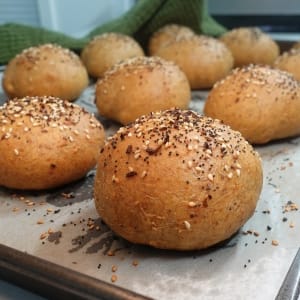
Keto bread doesn’t have to be dense, crumbly, or difficult to knead. This recipe creates soft keto buns using a structured keto bread dough while letting the bread machine perform most of the work. Instead of baking a loaf inside the machine, the bread machine mixes and kneads the dough until the gluten and fibre network is fully developed. The dough is then removed, shaped into buns, and baked in the oven.
The combination of vital wheat gluten, psyllium husks, oat fibre, and sourdough discard produces a structured dough that behaves much closer to traditional bread while remaining extremely low in net carbohydrates. These buns provide the structure needed for burgers, sandwiches, breakfast sandwiches, or dinner rolls while maintaining the satisfying chew of real bread.
🎥 Follow The Keto Baking Mechanic on YouTube for more flexible keto recipes: @theketobakingmechanic
https://sinlesssourdough.com/shop/
Philosophy
About Measurements & Precision in Keto Sourdough
Traditional baking often teaches that cooking is art, but baking is science — meaning it must be precise. That’s why many bakers prefer weighing ingredients in grams instead of using cups. Keto sourdough baking does not follow that traditional model.
Sinless Sourdough™ is a living fermentation system. Your starter changes daily depending on hydration, environment, temperature, feeding cycle, and ingredient brand. Because of this, no two bakes are ever identical.
You may use cups. You may use grams. What matters most is hydration and dough behaviour.
Gram measurements listed in Sinless™ recipes are approximate reference points based on commonly available brands. However, ingredient density varies depending on:
- Brand
- Grind size
- How tightly ingredients are packed
- Humidity
- Storage conditions
This is especially true for oat fibre, vital wheat gluten, psyllium husks, and active starter. Your starter’s weight will vary from day to day depending on how aerated or dense it is when measured.
The goal is not to hit an exact number on a scale. The goal is to build proper dough structure.
Watch your shaggy dough. If it doesn’t pull together, add hydration one tablespoon at a time. If it’s too loose, adjust dry ingredients gradually. Cups or grams — either works. Hydration awareness is what creates success. Sinless Sourdough™ is not about rigid precision. It’s about learning to read your dough.
The Difference
What Makes This Keto Bread Recipe Different
What makes this keto bread recipe different is that the dough is prepared in a bread machine, but the final result is keto buns rather than a loaf. The bread machine handles the mixing and kneading required to develop the gluten structure. Vital wheat gluten dough requires strong kneading, and doing this by hand can be difficult. A stand mixer can also generate significant heat and consume more electricity. Using the bread machine allows the gluten, psyllium, and fibre structure to develop automatically with very little effort.
Once the dough cycle finishes, the dough is removed, divided into small portions, shaped into buns, and baked in the oven.
This approach is particularly useful in spring and summer, when running a large stand mixer can heat up the kitchen. The bread machine keeps the mixing contained and allows you to prepare structured keto bread dough while using less electricity.
The result is soft, structured keto buns with real bread texture while letting the bread machine perform most of the work.
The Science
Why This Recipe Works
Three structural systems work together to produce a true bread texture.
Gluten Structure: Vital wheat gluten forms the elastic protein network that traps gas and produces chew.
Fibre Hydration: Psyllium husks absorb water and create a flexible gel network that stabilizes keto dough.
Moisture Control: Oat fibre balances hydration so the dough holds structure without becoming gummy.
Together these components produce a dough that behaves much closer to traditional bread.
What to Expect
Taste & Texture
Unlike many keto breads, these buns are:
Soft • Elastic • Sliceable • Lightly chewy
The flavour carries subtle fermentation depth from sourdough discard while still tasting like traditional bread. The crumb holds together well for sandwiches.
Using Discard
Benefits of Using Keto Sourdough Discard
One of the core practices of sourdough baking — whether traditional or keto — is maintaining a healthy starter through regular feedings. Each time a starter is fed, a portion of the jar is removed so the culture has room to grow and receive fresh food. In many sourdough systems this portion represents roughly three-quarters of the jar, often around one cup of starter.
Rather than throwing this portion away, it can be used in recipes. This portion is referred to as sourdough discard. Using discard allows you to:
- Continue feeding and strengthening your starter
- Maintain proper starter volume in the jar
- Reduce waste while baking regularly
Discard recipes are therefore part of the natural maintenance cycle of a healthy sourdough culture. For keto sourdough bakers, discard becomes especially useful because it can be incorporated into breads, buns, pancakes, and other baked goods without interrupting the feeding rhythm of the starter.
Umami and Flavour Depth
Discard is a by-product of fermentation, meaning it contains organic acids and fermentation compounds produced by sourdough microbes. These compounds contribute to umami, often referred to as the fifth taste. Umami adds:
Roundness • Depth • Savoury complexity
Even when discard is not strongly sour, it adds flavour dimension that plain dough cannot achieve.
Discard Is Not Very Tangy
Whether traditional or keto sourdough is used, discard generally does not produce strong sourdough tang because it is incorporated before long fermentation takes place. It contributes flavour depth but not strong acidity.
If You Want More Tanginess
Add 2–3 tablespoons apple cider vinegar to the dough. To maintain proper hydration, reduce the water by 2–3 tablespoons.
What You’ll Need
Ingredient Breakdown
Wet Ingredients
- 1 cup + 2 tablespoons spring water, lukewarm: Hydrates the dough and supports yeast activation. If adding 2 tablespoons apple cider vinegar for additional tanginess, reduce the water to 1 cup.
- 1 cup sourdough discard: Provides fermentation flavour and uses the by-product of daily starter feedings.
- 2 large eggs, beaten: Strengthen the structure and enrich the crumb.
- 2 tablespoons olive oil or avocado oil: Adds tenderness and prevents dryness.
Fibre Hydration Layer
- ½ cup oat fibre
- ¼ cup whole psyllium husks
Blend together and sprinkle over the wet ingredients. Allow to hydrate for 5 minutes.
Structural Ingredients
- 1½ cups vital wheat gluten
- 1 teaspoon Celtic salt
- 1 teaspoon sugar
- 1 teaspoon to 1 tablespoon baking powder
- 1 tablespoon SAF instant yeast
Recommended Equipment
Best Bread Machine for Keto Baking
Zojirushi Bread Machine.
🌰 Canada Amazon Links
Starter & Membership: Sinless Sourdough Dehydrated Starter — worth purchasing the membership, one-time payment
Equipment: Bread Machine — amzn.to/4qWvTKd
Ingredients: SAF Instant Dried Yeast · Anthony’s Vital Wheat Gluten · Anthony’s Oat Fiber · Anthony’s Psyllium Husks · Celtic Salt · Bob’s Red Mill Baking Powder (zero carbs)
🇺🇸 USA Amazon Links
Starter & Membership: Sinless Sourdough Dehydrated Starter — worth purchasing the membership, one-time payment
Equipment: Bread Machine — amzn.to/46u7ZgK
Ingredients: SAF Instant Dried Yeast · Anthony’s Vital Wheat Gluten · Anthony’s Oat Fiber · Anthony’s Psyllium Husks · Celtic Salt · Bob’s Red Mill Baking Powder (zero carbs)
What You’ll Need
Equipment
- Bread machine with Dough or Raw Dough cycle
- Baking sheet
- Parchment paper
- Wire cooling rack
Let’s Bake
Step-by-Step Instructions
Load the Bread Machine. Add ingredients in this order: wet ingredients, fibre blend, vital wheat gluten, salt around edges, sugar, baking powder, yeast in a small well. Do not bloom the yeast.
Run Dough Cycle. Select the Dough or Raw Dough cycle. The bread machine will mix and knead the dough.
Remove Dough. Once kneading finishes, remove the dough from the machine.
Divide Dough. Divide the dough into 12 equal pieces.
Shape the Buns. Stretch and tuck each dough piece into a tight ball. Place on a parchment-lined baking sheet.
Oil and Season. Brush lightly with olive oil. Top with sesame seeds or homemade everything-but-the-bagel seasoning.
Bake. Bake at 350°F (175°C) for 20 to 25 minutes, or until golden.
Cool. Cool on the tray 5 minutes, then transfer to a wire rack. Cooling allows the gluten and psyllium structure to stabilize.
Troubleshooting
Common Mistakes
Crumbly texture
Ensure whole psyllium husks are used, not powder.
Dough too dry
Add warm water gradually during mixing.
Gummy crumb
Allow buns to cool completely before slicing.
Make It Your Own
Variations
Burger Buns
Divide dough into 8 larger buns.
Dinner Rolls
Leave plain with sesame seeds.
Everything Bagel Buns
Add everything seasoning before baking.
By the Numbers
Nutrition
Entire Batch
Calories: 1,684 kcal • Total Carbs: 150g • Fibre: 123g • Net Carbs: 27g • Protein: 213g • Fat: 52.8g
Per Bun (12 buns)
Calories: ~140 kcal • Total Carbs: ~12.5g • Fibre: ~10.25g • Net Carbs: ~2.25g • Protein: ~17.75g • Fat: ~4.4g
Nutritional values vary depending on ingredient brands and country labelling standards.
Keeping It Fresh
Storage
- Room temperature: up to 3 days
- Refrigerator: up to 1 week
- Freezer: up to 3 months
Freeze individually for convenient use.
Setting Expectations
Practice Batch Philosophy
Every bread machine and kitchen environment behaves differently. Your first bake helps you learn:
- How your machine kneads
- How your ingredients hydrate
- How your dough behaves
Observe your dough. Adjust hydration gradually. Practice builds mastery.
Disclaimer
All information provided on this website regarding the health benefits of sourdough low carb bread is intended for educational purposes only. The content presented is not meant to be taken as specific medical advice.
KETO SOURDOUGH DISCARD BUNS
High-protein keto bread dough made in the bread machine and baked as soft keto buns. Uses sourdough discard for flavour and ultra-low net carbs.
- Prep Time: 40 (10 Prep & 30 Rest)
- Cook Time: 25
- Total Time: 65
- Yield: 12
- Category: Side Dish
- Method: Bread Machine
- Cuisine: American
- Diet: Diabetic, Keto, Low-Carb
Ingredients
- 1 cup + 2 tablespoons lukewarm spring water
If adding 2 tbsp apple cider vinegar for extra tang, use 1 cup water instead - 1 cup sourdough discard
- 2 large eggs, beaten
- 2 tablespoons olive oil or avocado oil
- ½ cup oat fibre
- ¼ cup whole psyllium husks
- 1½ cups vital wheat gluten
- 1 teaspoon Celtic salt
- 1 teaspoon sugar
- 1 teaspoon to 1 tablespoon baking powder
- 1 tablespoon SAF instant yeast
Instructions
Notes
Entire Batch
Calories: 1,684 kcal
Total Carbs: 150 g
Fibre: 123 g
Net Carbs: 27 g
Protein: 213 g
Fat: 52.8 g
Per Bun (12 buns)
Calories: ~140 kcal
Total Carbs: ~12.5 g
Fibre: ~10.25 g
Net Carbs: ~2.25 g
Protein: ~17.75 g
Fat: ~4.4 g
Nutritional values vary depending on ingredient brands and country labelling standards.
Responses